
Top 10 Conditions Treated by Physiotherapy in Bangalore
From low back pain and sciatica to sports injuries and post-surgical recovery, physiotherapy in Bangalore plays a central role in helping people move, work and train without pain. This guide walks through the ten conditions physiotherapists in Bangalore see most often, what treatment typically involves, and how to choose a clinic you can trust — including practical guidance for residents of Akshaya Nagar, Yelenahalli and the wider Begur–Koppa Road area.
On This Page
Bangalore’s mix of long commutes, desk-based work, packed weekend sports calendars and an ageing population means physiotherapists across the city treat a fairly consistent set of conditions week after week. Knowing what physiotherapy actually treats — and what a typical course of treatment looks like — makes it easier to decide when to book an assessment rather than “wait and see.” Below are the ten conditions seen most often in physiotherapy clinics in Bangalore, followed by practical answers to the questions patients ask before their first visit.
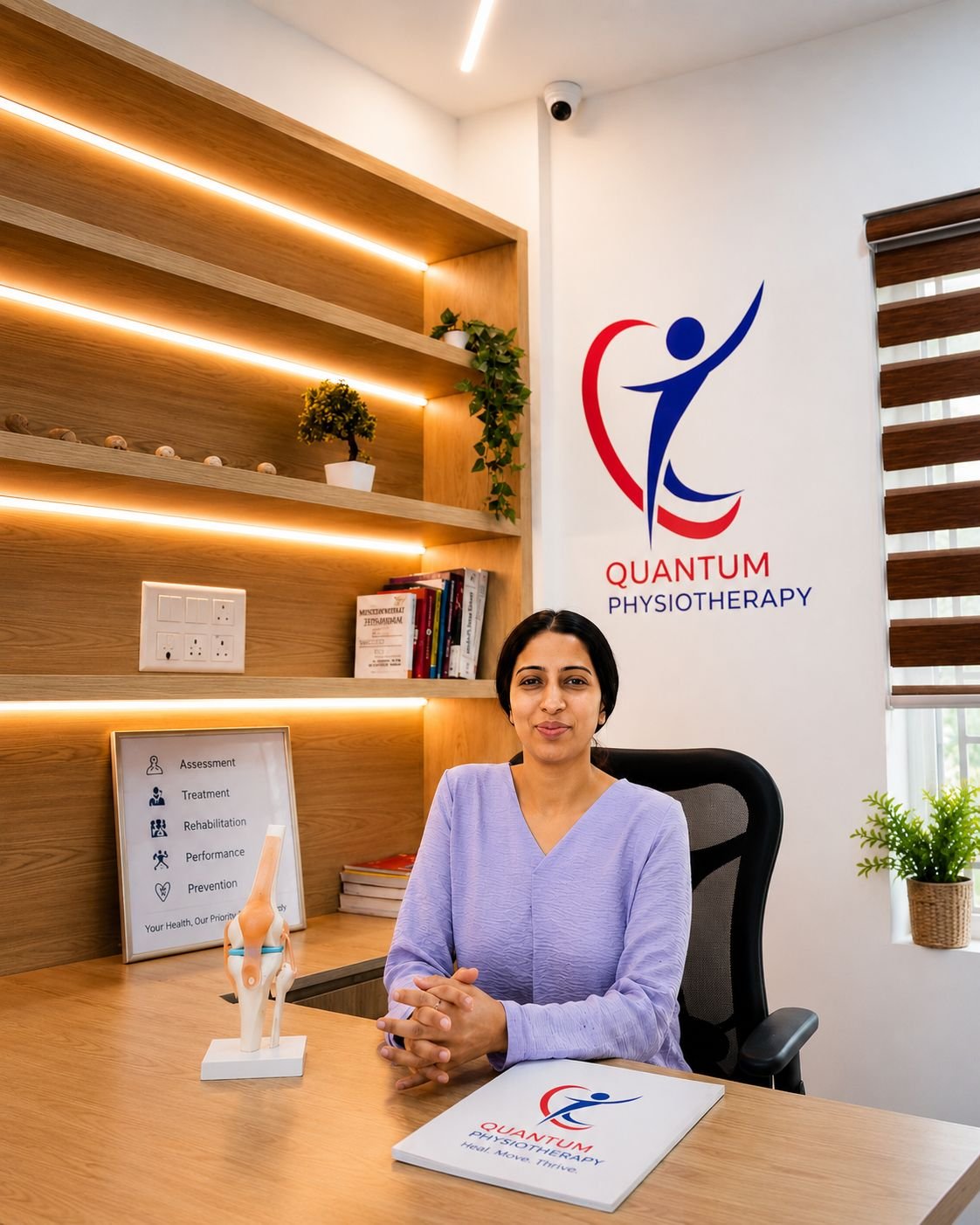
Medically reviewed by Dr. Ambreen Akhtar, PT · BPT · 7 years of clinical experience
Physiotherapist, Quantum Physiotherapy & Sports Rehab — Akshaya Nagar
Need help with pain or an injury?
Book a physiotherapy assessment with Quantum Physiotherapy & Sports Rehab and get a clear, individualised plan for your recovery.
Book an Assessment1 Low Back Pain and Sciatica
Low Back Pain and Sciatica
Low back pain is one of the most common reasons people search for a physiotherapist in Bangalore, and it affects everyone from software professionals sitting through long video calls to homemakers lifting and bending throughout the day. Sciatica — pain that radiates from the lower back down through the buttock and leg — is closely related and often arises from irritation or compression of the sciatic nerve, commonly linked to a disc issue or muscle tightness in the lower back and hip.
Common Symptoms
- Dull ache or sharp pain in the lower back, especially after sitting or standing for long periods
- Stiffness first thing in the morning or after long car or bike rides
- Shooting or burning pain travelling into the buttock, thigh or calf (sciatica)
- Pain that worsens with bending, twisting or lifting
How Physiotherapy Can Help
Back pain physiotherapy in Bangalore typically begins with a detailed assessment of movement patterns, posture, core and hip strength, and nerve mobility to identify what’s driving the pain. Treatment usually combines manual therapy to ease muscle tightness and joint stiffness, targeted core and hip strengthening, nerve-gliding exercises for sciatica, and practical advice on sitting posture, workstation setup and safe lifting technique. Most people notice a gradual reduction in pain and improved tolerance for sitting and daily activity over a course of structured sessions, rather than an overnight fix.
2 Neck Pain and Cervical Spondylosis
Neck Pain and Cervical Spondylosis
With long hours spent at laptops, phones and steering wheels, neck pain has become one of the most frequent complaints at physiotherapy clinics across Bangalore. Cervical spondylosis — age-related wear of the discs and joints in the neck — adds stiffness and, at times, nerve-related symptoms in the arm or hand.
Common Symptoms
- Persistent stiffness or ache at the base of the neck and across the shoulders
- Reduced ability to turn or tilt the head comfortably
- Headaches that begin at the back of the head or base of the skull
- Tingling, numbness or weakness radiating into the arm or hand
How Physiotherapy Can Help
Treatment generally focuses on restoring neck and upper-back mobility, releasing tight muscles around the shoulders and neck, and strengthening the deep neck flexors and postural muscles that support the head through long working hours. Where symptoms travel into the arm, nerve-specific techniques and gentle traction-based approaches may be used. Ergonomic guidance — screen height, chair setup, phone habits — is a standard part of a neck pain plan, since posture during the other 23 hours of the day matters as much as the exercises themselves.
3 Knee Pain and Knee Osteoarthritis
Knee Pain and Knee Osteoarthritis
Knee pain physiotherapy in Bangalore is sought by a wide range of people — from younger patients with pain after running or climbing stairs, to older adults managing knee osteoarthritis, a gradual wearing down of the joint’s cartilage that leads to pain, stiffness and swelling.
Common Symptoms
- Pain when climbing stairs, squatting, kneeling or standing up from a chair
- Swelling or a feeling of warmth around the knee joint
- A grinding or clicking sensation with movement
- Stiffness after rest that eases once moving (“morning stiffness”)
How Physiotherapy Can Help
A physiotherapy plan for knee pain typically strengthens the muscles that support the knee — particularly the quadriceps, hamstrings and hip muscles — to reduce load through the joint itself. Manual therapy can ease stiffness, while activity modification and gait retraining help patients stay active without aggravating symptoms. For knee osteoarthritis, physiotherapy is widely recommended as a first-line, non-surgical approach to manage pain and maintain function, often alongside guidance from an orthopaedic doctor.
4 Shoulder Pain and Frozen Shoulder
Shoulder Pain and Frozen Shoulder
Shoulder pain covers a wide range of issues, from rotator cuff irritation to frozen shoulder (adhesive capsulitis) — a condition where the shoulder capsule stiffens and thickens, causing progressive pain and a marked loss of movement. Frozen shoulder physiotherapy in Bangalore is one of the more specialised areas of treatment, since the condition typically moves through distinct freezing, frozen and thawing phases.
Common Symptoms
- Gradually worsening shoulder pain, often worse at night
- Increasing difficulty reaching overhead, behind the back, or out to the side
- A noticeable stiffness that limits everyday tasks like dressing or reaching for a seatbelt
- Pain and stiffness that can persist for several months
How Physiotherapy Can Help
Treatment is tailored to the phase of the condition. In the painful, “freezing” phase, the focus is on pain relief and gentle, controlled movement; as stiffness becomes the dominant issue, hands-on mobilisation and progressive stretching are used to regain range of motion. Rotator cuff and shoulder-blade strengthening is introduced as movement improves, to support long-term shoulder function. Patients are also guided on pacing activity so they don’t aggravate an already irritable joint.
5 Sports Injuries
Sports Injuries
Bangalore’s active running, cricket, badminton and football communities keep sports physiotherapy in Bangalore in steady demand. Sports injuries range from acute events — a hamstring strain during a sprint, a rolled ankle on the badminton court — to overuse injuries that build up gradually from training load, technique issues or inadequate recovery.
Common Symptoms
- Sudden pain, swelling or reduced strength following a specific incident during play
- Pain that appears only during or after training and gradually worsens over weeks
- Reduced speed, power or confidence in the affected limb
- Recurring niggles in the same muscle or joint across a season
How Physiotherapy Can Help
Sports injury rehabilitation in Bangalore follows a staged approach: managing pain and swelling in the early phase, restoring full range of motion and strength in the middle phase, and rebuilding sport-specific movement, speed and confidence before a safe return to play. Physiotherapists also work with athletes on injury-prevention strategies — load management, warm-up routines and strength work — to reduce the risk of the same injury recurring once play resumes.
6 ACL, Meniscus and Other Ligament Injuries
ACL, Meniscus and Other Ligament Injuries
Ligament injuries around the knee — including anterior cruciate ligament (ACL) tears and meniscus damage — are among the more serious injuries physiotherapists in Bangalore help patients recover from, whether the injury is managed surgically or non-surgically. These injuries commonly happen during sudden changes of direction, pivoting or awkward landings in sports like football, basketball and badminton.
Common Symptoms
- A popping sensation at the time of injury, followed by rapid swelling
- A feeling that the knee is unstable or “gives way,” especially on turning
- Locking or catching of the knee (more typical of meniscus involvement)
- Difficulty fully straightening or bending the knee
How Physiotherapy Can Help
Whether or not surgery is involved, structured rehabilitation is essential for a safe return to sport and daily activity. Physiotherapy addresses swelling and range of motion in the early stages, then progressively rebuilds quadriceps, hamstring and hip strength, balance and proprioception (the joint’s sense of position), and finally sport-specific agility and confidence. For patients who have had ACL reconstruction, a structured, criteria-based physiotherapy program is a well-recognised part of achieving a safe return to sport.
7 Ankle Sprains, Foot Pain and Plantar Fasciitis
Ankle Sprains, Foot Pain and Plantar Fasciitis
Ankle sprains are among the most common sports-related injuries seen in physiotherapy clinics, while plantar fasciitis — inflammation of the thick band of tissue along the sole of the foot — is a frequent cause of heel pain in walkers, runners and people who spend long hours on their feet.
Common Symptoms
- Swelling, bruising and pain on the outside of the ankle after a twisting injury
- A feeling of the ankle “giving way” on uneven ground
- Sharp heel pain with the first few steps in the morning (plantar fasciitis)
- Aching in the arch or heel that builds up over the day
How Physiotherapy Can Help
For ankle sprains, physiotherapy restores range of motion, strength and — importantly — balance and proprioception, since an under-rehabilitated ankle sprain is a common cause of repeated sprains. For plantar fasciitis, treatment usually combines calf and foot stretching, targeted strengthening, taping or footwear advice, and load management to allow the tissue to settle and adapt. Both conditions respond well to timely, structured rehabilitation rather than “resting it off” indefinitely.
8 Post-Surgical and Post-Operative Rehabilitation
Post-Surgical and Post-Operative Rehabilitation
Recovery after orthopaedic surgery — knee or hip replacement, ACL reconstruction, rotator cuff repair or spine surgery — depends heavily on structured, progressive rehabilitation. Post-surgical physiotherapy in Bangalore works alongside the operating surgeon’s protocol to help patients regain movement, strength and independence safely.
Common Symptoms / Concerns
- Stiffness and swelling around the surgical site in the initial weeks
- Difficulty bearing weight, walking or performing daily tasks independently
- Muscle weakness from a period of reduced activity before or after surgery
- Uncertainty about which movements are safe at each stage of recovery
How Physiotherapy Can Help
Post-operative physiotherapy typically follows a phase-wise protocol agreed with the surgical team — beginning with safe movement, swelling control and gentle range-of-motion work, then progressing to strengthening, balance and functional retraining (walking, stairs, getting up from a chair), and finally activity- or sport-specific rehabilitation where relevant. Clear communication between the physiotherapist and the operating surgeon helps ensure the pace of rehabilitation matches how the tissue is healing.
9 Posture-Related Pain and Workplace Injuries
Posture-Related Pain and Workplace Injuries
With a large share of Bangalore’s workforce in desk-based IT and office roles, posture-related pain has become one of the most preventable — yet most common — reasons people visit a physiotherapy clinic. Prolonged sitting, poor workstation setup and long screen time place sustained strain on the neck, upper back and lower back.
Common Symptoms
- Aching between the shoulder blades or across the upper back by the end of the workday
- Rounded shoulders and a forward-leaning head posture
- Tension headaches linked to long screen sessions
- Lower back stiffness after extended sitting
How Physiotherapy Can Help
Physiotherapy for posture-related pain combines hands-on treatment for tight, overworked muscles with a strengthening program for the postural muscles that fatigue during long sitting — particularly around the shoulder blades, upper back and core. Practical ergonomic adjustments (desk and chair height, monitor position, regular movement breaks) are usually built into the plan, since sustainable improvement depends on changing the daily postural load, not just treating the symptoms in isolation.
10 Muscle, Tendon and Joint Injuries
Muscle, Tendon and Joint Injuries
Beyond the specific conditions above, physiotherapists regularly treat a broad range of muscle strains, tendon irritations (tendinopathies) and joint pain — from tennis elbow and hamstring strains to hip and wrist pain — that affect both active and sedentary patients alike.
Common Symptoms
- Localised pain, tenderness or swelling around a muscle, tendon or joint
- Pain that increases with specific movements or repetitive activity
- Reduced strength or grip in the affected area
- Symptoms that persist or recur despite rest
How Physiotherapy Can Help
Treatment is guided by an accurate diagnosis of which tissue is involved and why it’s under strain. This typically includes manual therapy, progressive loading exercises (particularly important for tendon injuries, which respond well to gradually increasing load), activity modification, and, where relevant, correction of the technique or repetitive movement pattern that contributed to the problem in the first place.
Not sure what is causing your pain?
An assessment can help identify the factors contributing to your symptoms and determine an appropriate rehabilitation plan.
Book a Physiotherapy AssessmentWhen Should You See a Physiotherapist?
There’s no single “right” moment to see a physiotherapist, but a few signs generally suggest it’s worth booking an assessment rather than waiting:
- Pain that has lasted more than a week or two without improving
- Pain or stiffness that limits work, sleep, exercise or daily tasks
- An injury during sport or exercise, especially with swelling or instability
- Ongoing recovery needs after surgery, as advised by your surgeon
- Recurring episodes of the same pain or injury
- A desire to move, train or exercise with better technique and less risk of injury
Early assessment doesn’t always mean something is seriously wrong — but it does mean problems are usually addressed while they’re simpler to manage.
What Happens During a Physiotherapy Assessment?
A first physiotherapy visit is primarily about understanding the problem before treating it. Most assessments in Bangalore clinics follow a broadly similar structure:
- History: how and when the problem started, what makes it better or worse, and relevant medical background
- Physical examination: movement, strength, flexibility and, where relevant, specific orthopaedic tests
- Functional assessment: how the issue affects walking, sitting, lifting, sport or work tasks
- Discussion: a clear explanation of the likely cause, expected recovery timeline and treatment options
- Plan: an individualised treatment and home-exercise plan, with realistic short- and long-term goals
Wearing comfortable clothing that allows easy movement of the affected area, and bringing any relevant scans, reports or doctor’s referral, helps make the first assessment more productive.
What Treatments Are Used in Physiotherapy?
Physiotherapy draws on a range of evidence-informed techniques, chosen based on the specific condition, stage of healing and patient goals. Commonly used approaches include:
- Manual therapy: hands-on joint mobilisation and soft-tissue techniques to ease pain and stiffness
- Therapeutic exercise: individualised strengthening, flexibility and control exercises, progressed over time
- Movement re-education: correcting posture, gait or technique patterns that contribute to pain
- Electrotherapy modalities: used selectively, alongside — never instead of — active exercise-based treatment
- Taping and bracing: short-term support during specific phases of injury or sport
- Patient education: practical guidance on activity, ergonomics and self-management strategies
A note on realistic expectations
Physiotherapy is highly effective for a wide range of musculoskeletal and sports-related conditions, but recovery timelines vary from person to person, and not every condition resolves the same way. A physiotherapist can give a realistic, individual prognosis only after a proper assessment.
How Many Physiotherapy Sessions Will I Need?
This is one of the most common questions patients ask, and the honest answer is: it depends on the condition, how long it has been present, its severity, and how consistently home exercises are followed between sessions. As a general guide:
- Acute, recent-onset issues (a mild muscle strain or minor sprain) may need only a handful of sessions
- Chronic or recurring conditions (long-standing back pain, osteoarthritis) typically involve a longer program with periodic review
- Post-surgical rehabilitation is usually the longest, following a structured, multi-phase protocol over weeks to months
A good physiotherapist will outline an expected timeline at the assessment stage and adjust it as your response to treatment becomes clear, rather than committing to a fixed number of sessions upfront.
How to Choose a Physiotherapy Clinic in Bangalore
With a large number of clinics across the city, a few practical factors help narrow down where to book an assessment:
- Qualified, experienced physiotherapists with relevant clinical training
- An individualised approach — a plan built around your specific condition and goals, not a one-size-fits-all routine
- Clear communication about your diagnosis, treatment plan and expected timeline
- Convenient location — proximity matters for a treatment plan that may involve multiple sessions a week
- Appropriate equipment and space for both hands-on treatment and exercise-based rehabilitation
- Transparent pricing and scheduling, with straightforward booking
For residents of South Bangalore, a clinic that’s genuinely nearby — rather than a long drive across traffic — makes it far easier to stay consistent with a rehabilitation program, which is often the biggest factor in a good outcome.
Physiotherapy in Bangalore
Bangalore’s physiotherapy needs are shaped by the city itself: long commutes and desk-based work driving neck, back and posture-related pain; an active running, cricket and racquet-sports community generating sports injuries and ligament issues; and a growing number of joint replacements and orthopaedic surgeries requiring structured post-surgical rehabilitation. Whether you’re searching for physiotherapy near me in Bangalore after a recent injury or looking for ongoing support for a chronic condition, the fundamentals stay the same: an accurate assessment, an individualised plan, and a physiotherapist you can see consistently.
Quantum Physiotherapy & Sports Rehab is based in Akshaya Nagar, Bangalore, close to Yelenahalli and directly along the Begur–Koppa Road corridor, making it a practical option for patients across South and South-East Bangalore — including nearby areas such as Begur, Bannerghatta Road, JP Nagar, Jayanagar, HSR Layout and Koramangala, as well as patients travelling from further afield in Electronic City and Whitefield for a specific physiotherapist or sports rehabilitation program.
If you’re looking specifically for physiotherapy in Akshaya Nagar or a physiotherapist in Akshaya Nagar, our Akshaya Nagar branch is set up to assess and treat the full range of conditions covered in this guide — from back and neck pain to sports injuries and post-surgical rehabilitation.
Looking for a Physiotherapist in Akshaya Nagar, Bangalore?
Quantum Physiotherapy & Sports Rehab is located in Akshaya Nagar, close to Yelenahalli and directly on the Begur–Koppa Road corridor — a convenient option whether you need a one-off assessment or an ongoing rehabilitation program.
Contact Quantum Physiotherapy
About the Reviewer
Dr. Ambreen Akhtar, PT, BPT
7 years of clinical experience
Physiotherapist at Quantum Physiotherapy & Sports Rehab, Akshaya Nagar branch.
This article is for general educational purposes and does not replace an individual assessment or medical diagnosis. If you are experiencing pain, an injury or a health concern, please consult a qualified physiotherapist or doctor for advice specific to your situation.
Frequently Asked Questions
What are the most common conditions treated by physiotherapists in Bangalore?
Physiotherapists in Bangalore most commonly treat low back pain and sciatica, neck pain, knee pain and osteoarthritis, shoulder pain including frozen shoulder, sports injuries, ligament injuries such as ACL and meniscus tears, ankle sprains and plantar fasciitis, post-surgical recovery, and posture-related pain linked to desk-based work.
Can physiotherapy help with back pain?
Yes. Physiotherapy is widely used and recommended for most types of mechanical low back pain, combining manual therapy, core and hip strengthening, and posture and movement advice. For back pain associated with sciatica, nerve-specific exercises are often added. A physiotherapist will confirm whether your specific presentation is suitable for this approach.
Can physiotherapy help knee pain without surgery?
For many causes of knee pain, including knee osteoarthritis and patellofemoral (kneecap) pain, physiotherapy is often used as a first-line, non-surgical approach — focused on strengthening, movement retraining and activity modification. Whether surgery is needed at all depends on the specific diagnosis, which is best confirmed with an orthopaedic doctor and physiotherapist together.
Is physiotherapy useful after ACL surgery?
Yes — structured physiotherapy is a standard and important part of recovery after ACL reconstruction. A staged rehabilitation program, progressing through range of motion, strength, balance and sport-specific training, is generally considered essential for a safe return to sport and daily activity.
Can physiotherapy treat frozen shoulder?
Physiotherapy is a common part of frozen shoulder management, with treatment adapted to the phase of the condition — pain management and gentle movement early on, followed by progressive mobilisation and stretching as stiffness becomes the main issue. Recovery from frozen shoulder can take several months, and a physiotherapist can help guide realistic expectations along the way.
How do I find a good physiotherapist near me in Bangalore?
Look for a qualified, experienced physiotherapist who takes an individualised approach, explains your diagnosis and plan clearly, and is conveniently located for the number of sessions your condition needs. Clinics based in your own neighbourhood — such as Akshaya Nagar, Yelenahalli, Begur or nearby areas of South Bangalore — are often easier to visit consistently, which supports better outcomes.
Can I go directly to a physiotherapist without seeing a doctor?
In most cases, yes — physiotherapists are trained to assess musculoskeletal conditions directly and will refer you to a doctor or specialist if your presentation suggests a condition outside the scope of physiotherapy. If you already have a diagnosis or referral from a doctor, bringing that information to your first physiotherapy visit is helpful.
Is physiotherapy only for people with injuries?
No. While injury and pain management are common reasons people seek physiotherapy, it is also used for post-surgical rehabilitation, chronic condition management (such as osteoarthritis), posture correction, movement and technique improvement for sport, and general injury-prevention and strength work.