
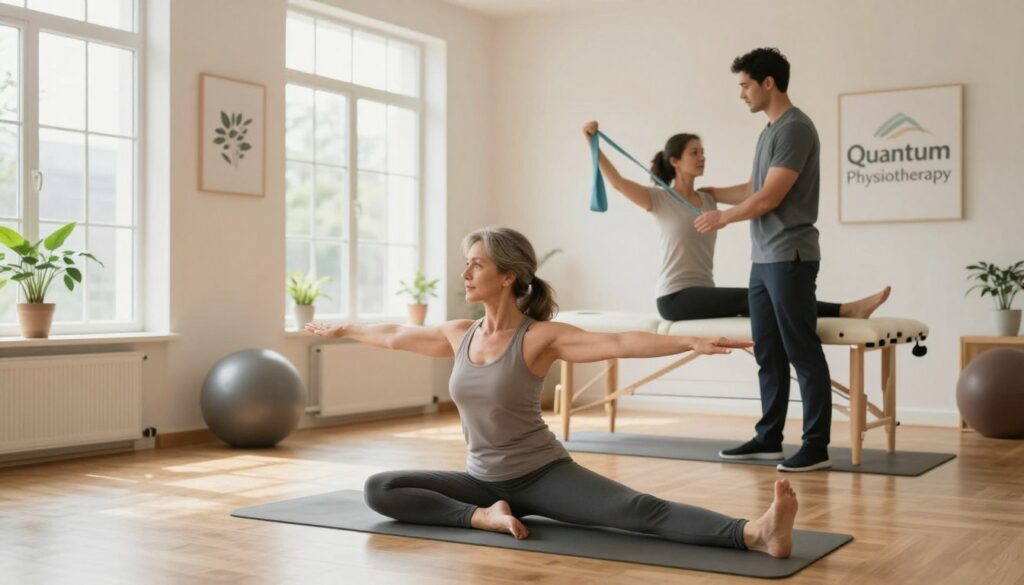
This clinically guided approach is not just about working out. It is a tailored plan used in physiotherapy to help people regain function, improve mobility and reduce pain. Programmes suit a wide age range and many needs, not only post-surgery.
In this practical how-to guide, you will learn how a programme is built, what types of movements are used, and how progress is measured over time in an Indian context. Expect clear steps on range of motion, strength, balance and endurance.
Core benefits go beyond pain relief. Plans boost mobility, strength, balance and everyday confidence. The same plan can be adapted for beginners, older adults, desk workers and those returning to sport.
Before you start or progress, note that symptoms, conditions and medical history matter. Seek professional guidance so your plan is safe and personalised for better long-term health and fitness in daily life today.
Key Takeaways
- Therapeutic plans are clinically guided and tailored to the individual.
- They improve movement, strength, balance and day-to-day confidence.
- Programmes are adaptable for all ages and activity levels.
- Progress is tracked through range of motion, strength and endurance measures.
- Medical history and symptoms determine safe progression; consult a professional.
What therapeutic exercise is and why it’s used in rehabilitation today
Restoring movement starts with a structured plan of activities tailored to each person’s condition. A planned programme of physical activities — such as gait training, neuro re‑education and task‑based work — is prescribed to help people recover from diseases or conditions that limit movement and daily function.
How it fits in a physical therapy treatment plan
Assessment guides the prescription. Goals, baseline range of motion and symptom response shape progression.
Programmes often move from gentle ROM work to restorative tasks as function improves. They may run alongside medication or surgery during recovery.
How it differs from fitness and corrective training
Unlike general fitness, the clinical focus is safe return to function rather than performance or weight goals. Compared with corrective training, the priority is chronic limitations and restoring overall function for daily life.
| Focus | Goal | Typical patients |
|---|---|---|
| Clinical programme | Restore safe function | Post‑injury, chronic conditions |
| General fitness | Performance, body composition | Healthy adults |
| Corrective training | Movement pattern optimisation | Movement‑specific issues |
Who benefits
- People with pain or reduced mobility after injury or illness
- Those with chronic conditions, such as arthritis or persistent back issues
- Patients needing improved independence and safer function
Programmes are individualised and can include independent practice or assisted sessions with a physiotherapist or caregiver. The aim is not to push through pain but to choose movements that support healing and reduce setbacks.
How therapeutic exercise helps improve wellbeing beyond pain relief
Beyond easing symptoms, targeted movement plans build energy, resilience and everyday confidence. These programmes do more than reduce pain; they improve stamina, mood and overall capacity to manage daily tasks.
Improving overall health, fitness, and quality of life
Stronger muscles and better endurance mean practical gains: longer walks, easier stair climbing and more independence at home or work. Small wins such as fewer pauses when walking or less breathlessness at the market add up over weeks.
Supporting circulation and breathing for recovery and stress reduction
Area-specific work that focuses on breathing and circulation can speed recovery by improving blood flow and lung capacity. Better circulation also lowers the body’s stress load and helps tissues heal faster.
Reducing the risk of future injuries through better joint support
When muscles around the joints are strengthened and coordinated, they protect the joint and lower the risk of future injuries. This joint support makes daily movement safer and reduces the chance of repeat problems.
Consistency matters: long-term benefits come from regular, correctly dosed practice rather than occasional intense sessions. Think of progress as broader quality-of-life gains—better sleep, improved mood and steadier confidence alongside symptom changes.
Setting a clear goal for your therapeutic exercises and treatment plan
Begin with one concrete, meaningful goal tied to a real daily task. This turns general aims into measurable steps that patients can follow.
Choose outcomes that matter: link the goal to daily activities such as getting up from the floor, carrying groceries, commuting or household tasks. A clear goal improves adherence and shows real-world gains.
Match movements to condition and recovery stage
Match the plan to the patient’s condition and stage of recovery. Early stages often use gentle range of motion and light loads to protect healing tissues.
As recovery progresses, increase strength and balance work. Keep adjustments small and measured to avoid flare-ups.
Choosing independent, assisted-active or guided sessions
Independent sessions build habit and confidence for simple activities. Assisted-active work with a caregiver helps when technique or support is needed. Guided therapy with a clinician is best for complex problems, safety checks and progression.
Track progress with simple measures
- Range of motion (ROM): record joint angles or reach limits.
- Strength markers: note tasks completed or weights used.
- Balance time: seconds standing unaided or during tasks.
- Endurance tolerance: walking duration or distance.
- Pain levels: rate before and after sessions.
“A goal-led plan reduces confusion and helps patients see real gains in everyday movement.”
Adjust rather than stop: if pain increases, sleep worsens, or progress stalls, scale back and adapt the plan. Small changes keep recovery steady and sustainable.
Range of motion and flexibility exercises to restore comfortable movement
Small, methodical range drills can restore daily movement and reduce guarding around affected joints.
What range of motion means: it is the span a joint can move safely. Range motion work improves joints and soft tissues so daily tasks feel easier and less painful.

Active, passive and assisted stretching
Active stretches use your own muscle effort to move a joint through a comfortable arc. They build control and help muscles adapt.
Passive stretches rely on an external force — gravity, a strap, or a therapist — to take a joint gently to its limit. They relax tight tissues without tiring muscles.
Assisted work sits between these two. A physiotherapist or carer supports the limb and guides safe limits while you help the motion when you can.
When to prioritise mobility
Focus on mobility early after an injury, illness, long bed rest, or prolonged sitting. Stiffness from inactivity can worsen discomfort and limit function.
How ROM supports posture and reduces pain
Better flexibility improves alignment, which boosts muscle power and lowers strain. Wider motion options reduce protective muscle guarding and improve joint mechanics.
- Simple self-checks: compare left and right, note stiffness after sitting, and test key daily tasks.
- Progress gently: increase range slowly and stop if sharp pain appears.
| Method | Primary benefit | When to use |
|---|---|---|
| Active stretching | Control and strength | When pain is low and muscles can work |
| Passive stretching | Relaxation of tight tissues | Early rehab or when muscles are painful |
| Assisted stretching | Safe progression with support | After injury or with limited mobility |
“Aim for steady gains, not forced end ranges.”
Strength and resistance training for muscle strength, stability and joint health
A planned approach to resistance training restores muscle power and improves confidence in movement. Progressive work builds load tolerance around joints and increases stability for everyday tasks.
Progressive resistance methods
Start with light bands or bodyweight and move to tubing, free weights or kettlebells as pain allows. Progression uses small increases in load, repetitions or range, guided by recovery signals and clinician advice.
Protecting injured tissues while keeping other muscles active
Focus on unaffected muscle groups to prevent deconditioning. A therapist may modify part of a routine so the injured part rests while the rest of the body stays strong.
Core-focused stability
Core drills for the spine, hips and shoulders support posture and efficient movement. Strong midline control reduces strain on joints and aids balance during daily tasks.
Why too much rest is harmful
Prolonged inactivity leads to weakness, atrophy and slower recovery. Gentle, graduated training keeps the body working and speeds return to function.
| Goal | Method | Safety cue |
|---|---|---|
| Increase muscle strength | Bands → weights, slow progression | Controlled tempo; stop if sharp pain |
| Protect injured part | Modify load; train nearby muscles | Avoid painful ranges; monitor symptoms |
| Improve stability | Core holds, single‑leg balance | Quality over quantity; brief sets |
Balance and coordination exercises to lower fall and injury risk
A stable base of support makes everyday tasks — from turning to carrying — much safer.
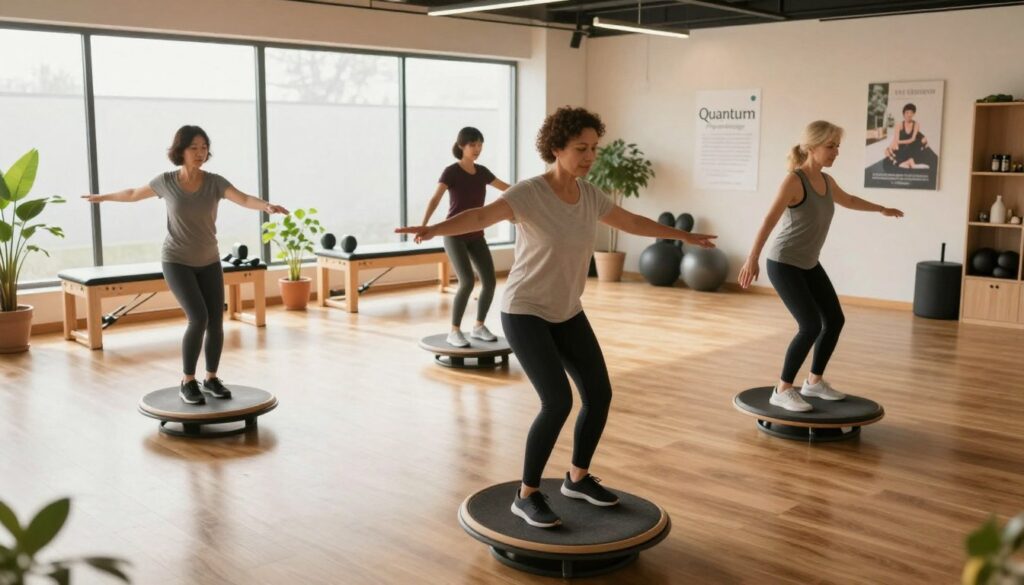
Balance basics: single‑leg stance and heel‑to‑toe walking
Stand near a chair or wall. Shift weight onto one foot and lift the other a few centimetres off the floor. Hold 10–30 seconds, keeping hips level and eyes forward.
Common errors: leaning the torso, looking down, or locking the knee. If those happen, reduce time or use light support.
For heel‑to‑toe walking, place the heel of one foot directly in front of the toes of the other and take slow steps. Keep arms relaxed and look ahead.
Coordination for safer movement in daily activities
Coordination links arms and legs so turning, reaching, stepping over obstacles and carrying items are controlled and smooth.
Practice reaching while standing, slow turns, and stepping over small objects. These drills improve timing and reduce the chance of trips and strains.
Progressions that challenge control without increasing pain
Progress from eyes open to eyes closed, then to soft or uneven surfaces, and finally add gentle head turns. Stop if pain rises.
- Use a wall or chair for safety during practice.
- Clear floor space and avoid rushing when tired.
- Increase challenge slowly and monitor symptoms.
| Drill | How to do it | Progression | Safety tip |
|---|---|---|---|
| Single‑leg stance | Hold 10–30s near support | Close eyes → softer surface | Keep support within reach |
| Heel‑to‑toe walk | Slow, straight steps for 10–20m | Carry a light object → head turns | Use clear path; stop if wobbling |
| Reach and turn | Slow reach then turn 90° | Add carrying small weight | Avoid quick movements when fatigued |
Improved balance and coordination reduce injury risk and build confidence to take part more fully in work, family and community activities.
Endurance and conditioning exercises to rebuild stamina and function
Conditioning through steady activity rebuilds the capacity to move for longer periods. This work restores the stamina needed for full workdays, errands and family duties.
Aerobic options such as walking and cycling to support recovery
Walking and cycling are simple, accessible activities across India. Start with short, tolerable bouts—five to ten minutes—and add a minute or two each session.
Try several short sessions daily rather than one long effort. Gradual increases fit into a clear plan and reduce the risk of setbacks.
How endurance training improves independence and ambulation
Endurance work improves walking ability, reduces breathlessness and increases confidence when moving about. Better ambulation directly supports independence at home and in the community.
Improved circulation and breathing efficiency help tissues heal and make everyday tasks less tiring.
Pacing, safety and scheduling for steady progress
Use the talk test or a simple perceived exertion scale to pace activity and avoid flare‑ups of pain. If speech is difficult, slow down; if you can chat comfortably, intensity is likely appropriate.
Consistency matters: aim for multiple short sessions across most days. Document duration and how you felt to guide gradual increases.
“Small, regular bouts of activity make gains sustainable and protect against relapse.”
Supportive therapies and tools that can enhance therapeutic exercise
Comfort measures and basic equipment can make movement work more effective and less painful. These adjuncts are most helpful when pain or stiffness limits tolerance for a plan, or when a short‑term measure speeds return to safe motion.
Manual techniques and pain‑relieving modalities
Hands‑on care such as massage, joint mobilisation and trigger‑point work can reduce guarding and ease tight muscles. Modalities like heat, ice or electrical stimulation are used to settle pain, improve sleep and lower blood pressure in some patients.
Common supportive tools
- Foam rollers — relieve local tightness and improve flexibility before practice.
- Mats — provide a safe surface for floor work and posture drills.
- Pulleys — help restore shoulder range with controlled motion.
- Hand/finger grips and putty — rebuild grip strength and fine motor control.
- Resistance bands, weights and bikes — scale load for progressive strength and endurance.
- Stability tools (balls, wobble pads, beams) — challenge posture and coordination when used correctly.
Making home practice safer
Set clear technique cues, use sturdy footwear and a clutter‑free space. Start light, monitor pain, and stop or regress if symptoms worsen. If dizziness, sharp pain or new numbness occur, pause and seek professional advice.
Tools support progress but do not replace good coaching, appropriate load and consistent practice.
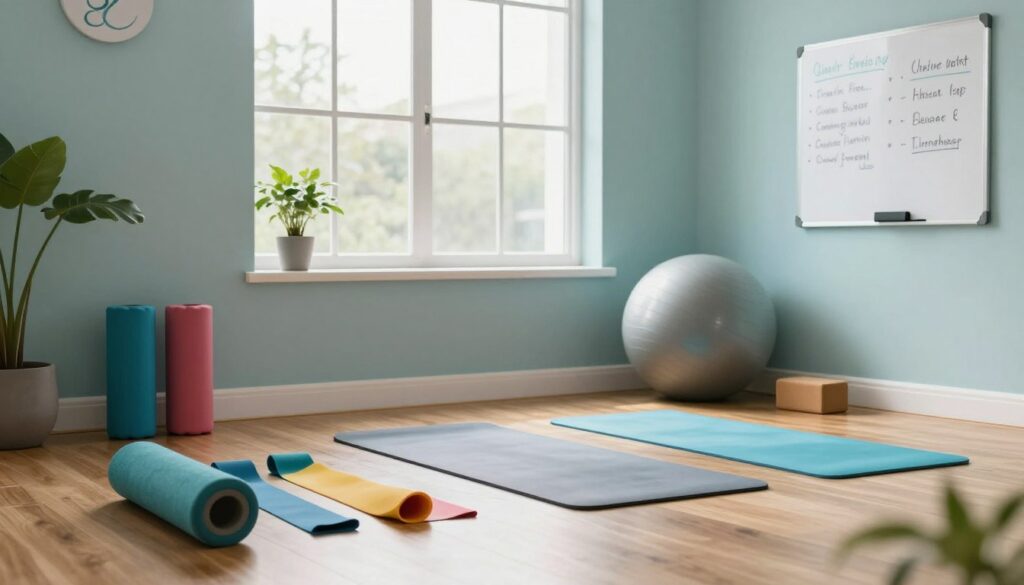
Making therapeutic exercise part of your life in India with professional guidance
Booking a physiotherapy assessment is the first step to a tailored, safe plan that fits your daily life in India.
Expect a short history, simple tests and an agreed treatment plan. Home programmes are prescribed with clear technique checks and gradual progressions for balance, strength and endurance.
Professional guidance helps patients choose the right types and activities for their condition and posture, and prevents overloading the body or worsening pain.
For busy schedules, use short blocks, habit stacking (after tea or work) and note symptoms and performance each week. Seek review if new numbness, sharp pain or sudden swelling appears.
Next steps: commit to a realistic plan, get technique checked early and progress slowly so gains last and support long-term rehabilitation and health.