
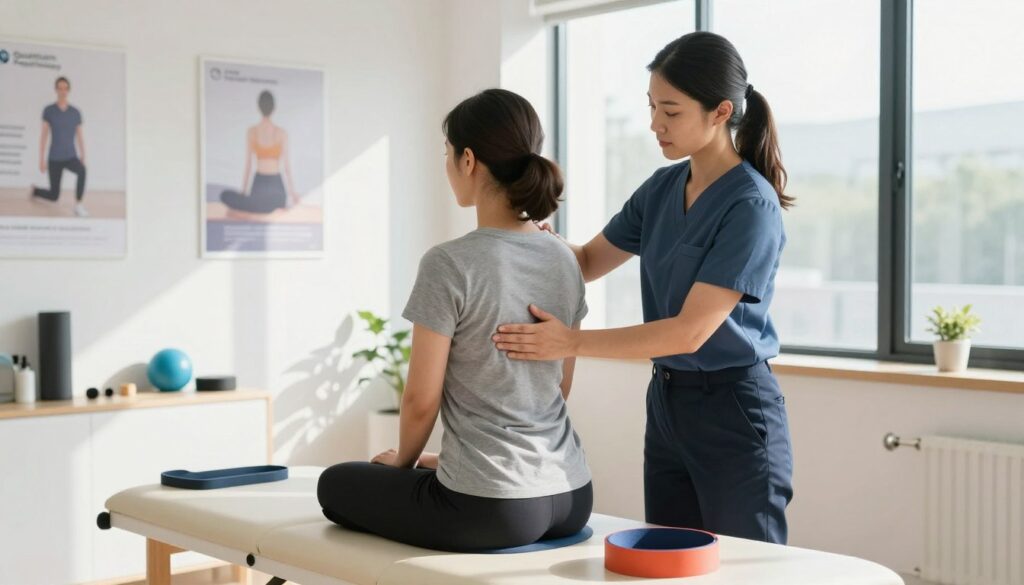
Change is possible, but it usually needs time and steady effort rather than quick fixes.
This short guide is for people in India who sit for long hours — desk workers, students, commuters and remote workers. Expect more comfort, less stiffness and better everyday alignment with consistent work on mobility, stretching and strength.
Posture here means how your body holds itself when sitting, standing, walking or lying down. Small habits add up over hours and weeks, so gentle daily practice matters.
We use self-checks, clear alignment cues, a mobility warm-up, targeted stretches and strengthening, plus practical ergonomics to help changes stick. The article also previews mobility drills, stretch routines, strength moves and screen-related exercises so you can jump straight to what you need.
Safety note: if pain is severe or worsening, seek professional advice rather than pushing through discomfort.
Key Takeaways
- Small, steady steps bring lasting change.
- Combine mobility, stretching and strength for best results.
- Ergonomic tweaks make improvements easier to maintain.
- Look out for worsening pain and consult a professional if needed.
- Better alignment often means improved strength, balance and wellbeing.
Why good posture matters for health, confidence, and pain prevention
Better body alignment supports strength, steadiness and easier movement in everyday tasks. When the skeleton stacks well, load spreads evenly across joints and muscles. That makes lifting bags, climbing stairs and long hours of sitting feel less tiring.
Alignment also helps balance and flexibility. When the torso and hips move freely, other parts do not compensate. Movement becomes smoother and less effortful.
Poor habits raise the risk of strain over time. Repeated slouching pulls extra demand onto muscles and stresses the spine and discs. This can lead to common patterns of neck, upper-back and lower-back pain.
Prevention is easier than long rehab. Small daily adjustments—stretching tight areas, strengthening weak muscles and lengthening the torso—add up without a gym membership.
Confidence and comfort improve too. An open chest and neutral head position often boost how you feel and how others perceive you at work or socially. For desk-bound readers in India, these small changes compound fast.
Common posture problems and the warning signs you shouldn’t ignore
Long hours in front of screens and sitting in cramped spaces often lead to visible body imbalances. Noticeable habits usually fall into three easy-to-spot groups and give distinct clues that action is needed.
Slouched sitting and rounded shoulders
The chest can collapse and the upper back rounds during desk work. This pattern makes the shoulders roll forward and the mid-back lose height.
Over time this links to lower back pain and neck strain after long days at a desk.
Forward head from screens
Looking down at phones or laptops brings the head forward. That increases load on the cervical spine and can produce headaches and tightness in the neck.
Uneven weight-bearing when standing or walking
Leaning on one leg during calls or while cooking shifts load to one side. This creates subtle spinal imbalance and may make one shoulder or hip sit higher.
Clues your back pain is posture-related
- Pain that worsens after sitting or standing for long periods.
- Frequent headaches tied to neck tension and shoulder stiffness.
- Noticeable relief when lying down or after short rests.
- Symptoms that return each workday or after long travel.
“If you see uneven shoulders or hips, note the change — it helps target which habits to adjust.”
| Problem | Common signs | Typical symptom |
|---|---|---|
| Rounded upper back | Collapsed chest, forward shoulders | Upper back stiffness and neck strain |
| Forward head | Chin jutting, looking down at screens | Headaches and neck pain |
| Uneven weight-bearing | One hip/shoulder higher, favouring one leg | Side-specific low back pain and imbalance |
Next: a quick self-check will help you pinpoint which positions and habits trigger your symptoms and guide simple fixes you can try immediately.
Quick self-check: assess your posture in sitting, standing, and screen time
Spotting small misalignments early makes it easier to protect your back and neck. The checks below take a minute and guide which habits to change right away.
Head, neck, shoulder and shoulder‑blade checks
Look from the side or use a quick photo. Is your chin jutting forward? Do the shoulders round?

Notice the shoulder blades. Do they sit flat on the rib cage or wing out? Try bringing the shoulder blades together gently — do this without shrugging the shoulders up.
Spine and pelvis alignment for upper‑ and lower‑back comfort
When sitting, keep feet flat and hips back in the chair. Ribs should stack over the pelvis. If the lower back arches or rounds, you may feel more lower back or upper back strain.
Workstation and phone‑use checks to reduce neck pain
- Screen at or slightly below eye level to reduce chin jutting.
- Avoid cradling your phone between shoulder and ear; hold it at eye height.
- Set a timer for movement breaks to change positions every 30–45 minutes.
“A quick photo from the side often shows head‑forward position and rounded shoulders better than you expect.”
Next step: once you know which positions are off, use alignment cues to make the mobility and strength work more effective and safer.
Posture correction basics: the alignment cues that make exercises work
Clear body cues help your muscles learn where to support you during sitting, standing and exercise. These simple signals make movement safer and help changes stick without extra effort.
Neutral spine and ribcage stacking for better posture
Stacking means ribs over pelvis and head over shoulders. Keep a long, neutral spine that avoids a big arch or a deep slump.
Shoulders relaxed, shoulder blades together (without shrugging)
Let the shoulders sit down and back gently. Draw the shoulder blades together only a little—avoid lifting the neck or tensing the traps.
Core muscles engaged to support the back
Use the core as a gentle brace rather than holding your breath. Engage the deep abdominal and pelvic-floor cues so the back feels supported during movement.
Breathing and control to hold position safely
Inhale to expand the rib cage, exhale to steady the centre. Controlled breathing helps you hold position without extra tension and keeps the neck neutral in planks and bridges.
- What good form feels like: stable, evenly loaded, no sharp pinching.
- Stop if: sharp pain, tingling or symptoms worsen.
- Use cues for: planks, bridges, stretches and everyday sitting or standing—short, frequent practice builds endurance.
“Practice small holds often so the body learns to hold position safely under fatigue.”
Warm-up mobility to reduce stiffness in the spine, shoulders, and hips
A brief mobility sequence primes the body so stretches and strength work feel safer and more effective. Use these simple exercises after long screen sessions or as a 3–5 minute movement snack during the day.
Cat‑Cow
Start on hands and knees. Inhale to lift the chest and extend the spine while looking gently up. Exhale to round the back and tuck the chin. Repeat smoothly for at least one minute to ease neck and shoulder tension.
Standing Cat‑Cow
Stand feet hip‑width apart with a slight knee bend. Round the back, then extend the spine. Hold each shape for about five breaths. This office-friendly exercise loosens hips and back with minimal space or time.
Thoracic rotation
From all fours, place one hand behind the head and rotate the elbow up across the chest. Move through the upper back, not the lower back. Do 5–10 reps each side to open the chest and improve upper back movement.
Seated twist
Sit tall and twist gently on the exhale. Keep breathing steady and avoid forcing range. This simple exercise gives gentle upper back mobility and prepares you for later strengthening work.
Mobility is the primer that makes later exercises safer and reduces strain in the upper back.
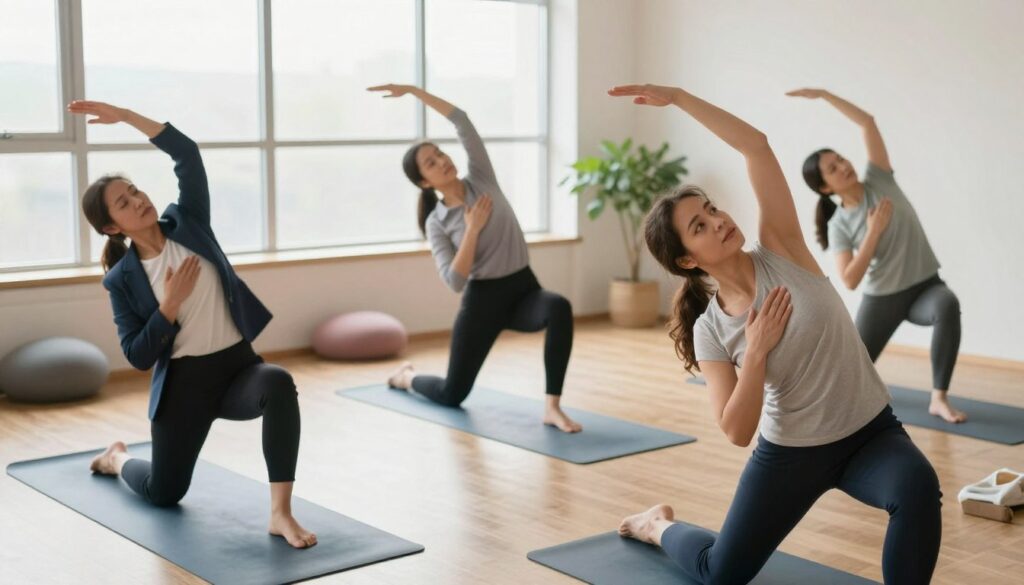
Stretching to open tight chest and lengthen the back of the body
A short, focused stretch routine can open the chest and lengthen the back where desk work tightens you most. These moves relieve chest tightness and ease lower back and back neck tension without needing special equipment.
Child’s Pose — release and breathe
Fold forward with hips toward the feet and arms extended. Breathe deeply for up to five minutes. Use a pillow or folded blanket under the thighs or forehead for comfort and to reduce strain on the lower back and back neck.
Forward fold — lengthen the posterior chain
Hinge at the hips, soften the knees and aim for a long spine as the head relaxes. Hold up to one minute. Focus on a gentle stretch in the glutes, hamstrings and entire back rather than forcing hands to the floor.
Chest opener and chest stretch
Interlace fingers behind the back and lift the chest without flaring the ribs. Keep the shoulders relaxed. Hold for five breaths and repeat about ten times as a controlled set to counter rounded shoulders.
Pigeon Pose and Downward‑Facing Dog
Pigeon opens the hip and pelvis; hold up to one minute each side and switch sides. Avoid sharp pinching. Downward‑Facing Dog lifts the hips and lengthens the spine; hold up to a minute, keep ears in line with upper arms and use it as a restful alignment drill.
Choose two or three stretches that match your pattern — consistent short practice beats a long, infrequent session.
Strengthening exercises that support the spine and improve posture
When muscles can hold you upright, small habits no longer derail your alignment during work or travel. Strengthening makes improvements sustainable because muscles must support alignment during long hours, not just while stretching.
High plank — build core and back stability
How: hands under shoulders, body in one straight line, engage core muscles, and look down to keep the neck long. Start with shorter holds and progress toward a one minute goal.
Common fixes: avoid hips sagging (which strains the lower back) or piking up. Keep shoulders stable and don’t let them collapse toward the ears.
Side plank — train side body alignment
How: stack ankles, lift hips, align head-to-heels and hold up to 30 seconds each side. If needed, drop the bottom knee for support as a regression.
Side strength reduces tendency to collapse into one hip and helps the back during walking and standing.
Glute bridge — activate the hips to protect the lower back
How: knees bent, feet hip-distance, lift hips on the exhale and squeeze glutes at the top. Hold up to one minute or repeat 10–15 reps. Avoid over-arching the lower back at the top.
“Aim for 2–3 sets of manageable holds or reps with rest between sets to keep form strict and safe.”
| Exercise | Key cue | Beginner target |
|---|---|---|
| High plank | Hands under shoulders, straight line, core engaged | 3 x 20–40s holds |
| Side plank | Hips lifted, stack or drop knee for support | 3 x 20s each side |
| Glute bridge | Squeeze glutes, avoid lower back arch | 2–3 x 10–15 reps |
Upper back, neck, and shoulders: targeted moves for screen-related posture
Targeted micro-drills calm neck tension and restore balance across the shoulders and upper back. These exercises are quick to learn and work well during short breaks at a desk or between calls.
Fast wins: focus on the neck, head alignment and shoulder blade control to reduce neck pain and improve upper-back strength. Aim for micro-sessions of 2–3 minutes twice daily.
Chin tuck to improve head position and ease neck pain
Starting position: sit or stand tall. Move the head straight back — not up or down — so the chin slides in toward the throat.
Hold 5–10 seconds, repeat 2–3 sets of 10–15. You should feel a gentle stretch at the base of the neck. Return to the starting position under control.
Shoulder blade squeeze to strengthen upper back muscles
Sit or stand tall. Draw the shoulder blades back and down without hiking the shoulders toward the ears.
Hold 5–10 seconds, reset fully, and repeat 2–3 sets of 10–15. This trains the shoulder blades together and helps strengthen muscles that pull the chest open.
Wall angels to reinforce shoulder and upper back alignment
Stand with your back against a wall, feet a short distance out. Keep elbows and hands in contact with the wall and slide arms up and down like a slow snow angel.
Do 2–3 sets of 10–15, moving slowly and keeping ribs from flaring. Keep shoulders relaxed and avoid jaw clenching.
Isometric pulls to practise shoulder blades together control
Seated in a soft-back chair, make gentle fists forward and pull elbows back while squeezing the shoulder blades. Hold for 10 seconds and repeat for about one minute total.
Use this as a desk-friendly strength option when time is limited. Stop if headaches worsen.
“Small, frequent practice is the best defence against screen-related neck and shoulder strain.”
| Drill | Key cue | Target sets/reps |
|---|---|---|
| Chin tuck | Head straight back; gentle base-of-neck stretch | 2–3 sets of 10–15, 5–10s holds |
| Shoulder blade squeeze | Back and down; avoid shrugging | 2–3 sets of 10–15, 5–10s holds |
| Wall angels | Elbows/hands contact wall; slow motion | 2–3 sets of 10–15 slides |
| Isometric pulls | Elbows back; squeeze shoulder blades together | Hold 10s, repeat for ~1 minute |
How to build a weekly routine: frequency, time, and progression
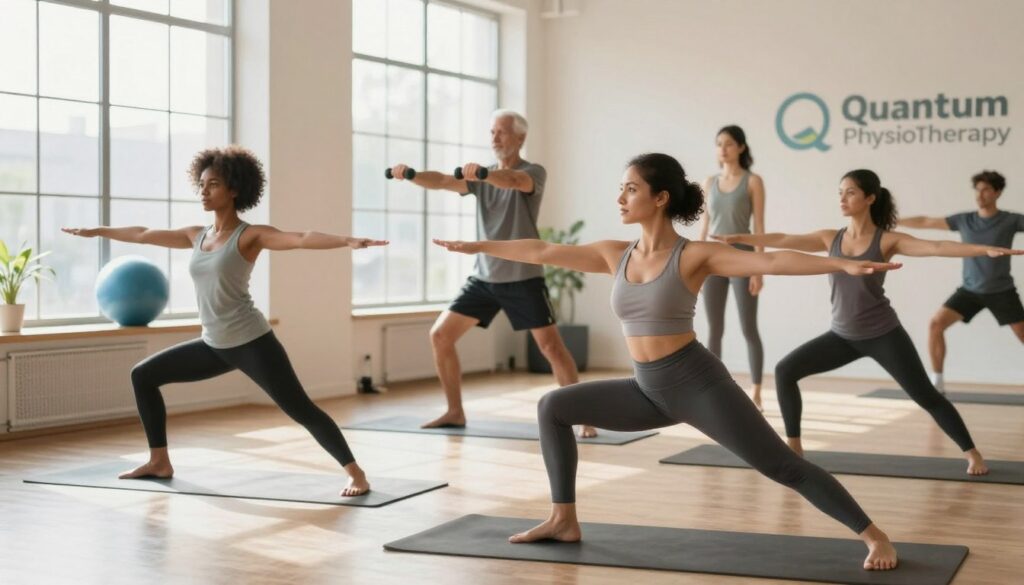
A sensible weekly routine balances short daily movement snacks with focused sessions a few times a week. Aim for steady practice rather than occasional long workouts.
Recommended frequency and duration
Plan: 2–3 sessions per week, 20–30 minutes each, plus short breaks during long hours of sitting.
How to combine mobility, stretching and strengthening
Structure each session simply:
- 3–5 minutes mobility warm-up
- 6–10 minutes stretching
- 8–12 minutes strengthening
- Finish with one posture drill (chin tuck or wall angels)
Progression tips, reps and form checks
Gradually increase challenge. Lengthen holds or add one set while keeping form strict. For targets, use:
- Chin tucks / shoulder squeezes: 2–3 sets of 10–15
- Side plank: build toward 30s each side
- Plank / bridge: progress up to 1 minute
Form checks: use a mirror, film a set, or apply stacking cues (ribs over pelvis, long neck) to avoid compensations.
Reduce injury risk by resting between strength days, never forcing stretches, and stopping for sharp pain or neurological signs.
Final advice: consistency beats intensity — steady sessions over weeks will help improve posture and lower long‑term risk of injury. If little changes after a few weeks, seek professional assessment.
Lifestyle and ergonomic changes that keep your posture on track in India
Simple changes around the home and office make your daily alignment easier to hold. Small, low‑cost swaps often give big relief for the back and neck, especially for long workdays.
Workstation checklist for Indian homes and offices
Screen top at eye level: raise a laptop with a stand or stacked books so the top of the screen meets eye height.
Chair that supports the lower back: add a small lumbar roll or folded towel if needed. Keep feet flat; use a footrest or flat board if your feet dangle.
How to sit for correct position
Move hips to the back of the seat, ribs stacked over the pelvis and shoulders relaxed. Avoid perching on the chair edge for long periods.
Tip: reset every 30–45 minutes — brief checks keep the body from slipping into a slump.
Breaks and movement snacks
Stand, walk or do 1–2 mobility drills (standing cat‑cow, shoulder blade squeezes) at least once each hour. These small bursts reduce stiffness and help the muscles support your spine.
Commute, mobile use and daily habits
Avoid prolonged neck flexion by raising the phone when possible and using earphones for long calls. Change position regularly during commutes and avoid carrying heavy loads on one side.
Sleep setup and shoes
Side-sleep with a pillow between the knees or lie on your back with support under the knees to keep the lower back neutral. Prioritise a supportive mattress for better long‑term health.
Choose comfortable, supportive footwear for long standing or walking. Replace shoes when soles wear unevenly to prevent altered alignment.
“Consistent small changes — workstation checks, hourly movement and supportive sleep — make correct posture easier to keep.”
When back pain needs professional support and a personalised plan
Seek professional help when your back pain stops improving or begins to limit daily tasks. Early evaluation helps target the correct treatment and avoids unnecessary delay.
Red flags to watch for include persistent or worsening pain, frequent headaches linked to neck tension, sleep disruption, or any numbness and tingling that spreads down the arms or legs.
When to stop self-management and seek advice
If steady home work—mobility, stretching and strength practice—does not ease symptoms within a few weeks, stop delaying a clinical review.
Also seek urgent care if pain follows a fall or if you notice sudden weakness or loss of bladder or bowel control.
What a clinical assessment may involve
A clinician will observe sitting and standing mechanics, test spine mobility and identify muscle imbalances. They will ask about daily triggers at work and home to tailor advice.
Physiotherapy, plans and imaging
Physiotherapy typically combines a personalised plan of mobility drills, targeted strengthening and ergonomic coaching, with gradual progressions based on symptoms and function.
Imaging such as X‑rays or other scans is usually considered when clinicians suspect structural issues or when symptoms do not match a simple soft‑tissue pattern.
Timely care reduces long‑term risk. Early professional input cuts the chance of chronic muscle fatigue, stiffness, nerve compression and progressive spine changes. Think of expert care as a complement to sensible home practice that speeds safe return to normal activity.
“Professional assessment and a clear plan often make recovery faster and safer than lone trial-and-error.”
Stay consistent and let posture wins compound over time
Small daily actions stack up: tiny wins over weeks lead to lasting change. Keep a simple log of back pain, screen-time breaks and which drills help most so you can tweak what you do.
Prioritise consistency over intensity. A brief weekly routine — one mobility drill, one stretch, one strengthening move and one screen-posture cue — is the minimum effective plan for busy days.
Better posture brings less back discomfort, easier breathing and more confidence. If pain persists or worsens, seek professional assessment rather than pushing through.
Practical tips to stay on track: set calendar reminders, keep a resistance band by your desk and pair drills with daily cues (tea breaks, meetings, or the commute). These small habits help strengthen muscles safely and make gains stick over time.