

Start stronger today with simple, practical guidance that fits into busy lives across India. This short guide explains how resistance training makes your body work harder than usual to build power, size and endurance.
You will learn clear form cues, easy rep ranges and weekly plans so you can begin where you are and progress safely. Most routines need no equipment at first; later you can add household items such as water bottles or bands for extra load.
Stronger bodies support mobility, independence and posture. They make daily tasks easier, improve balance and lower the risk of falls. There are also links to better heart health and improved mood, with fewer symptoms of anxiety and depression.
Key Takeaways
- Practical at‑home options build full‑body strength with simple progressions.
- Clear cues, rep ranges and weekly plans help steady improvement.
- Start without gear; use household items to increase load when ready.
- Stronger bodies aid mobility, balance and long‑term independence.
- Small, consistent efforts plus good recovery deliver real benefits.
What muscle strengthening really means for your body
Training with load rewires how the body handles force and fatigue. In simple terms, both strength and resistance training ask your body to work against a load — this might be bodyweight, bands, weights, water or gravity.

Strength training and resistance training explained
These approaches are the same idea: challenge the muscles so they adapt. Small tears and stress from work prompt repair. Over time that repair increases size, power and endurance.
How strengthening works
Progressive overload means increasing the demand slowly. That can be more reps, added load, extra sets or harder moves. Working to fatigue means stopping when a set feels very hard but still controlled.
Who benefits
Beginners, people returning after illness or long rest, and those managing arthritis or posture issues all gain from planned training. Goal‑based moves — like a sit‑to‑stand for lifting from the floor — make daily tasks easier and help you stick with a plan.
Expect steady progress. Results follow consistent work, good form and measured increases, not quick jumps to advanced routines.
Why strengthening your muscles matters for everyday health
Everyday tasks become simpler when your body can handle common loads with ease. Small, regular work on key areas helps with chores, travel and long days at a desk.
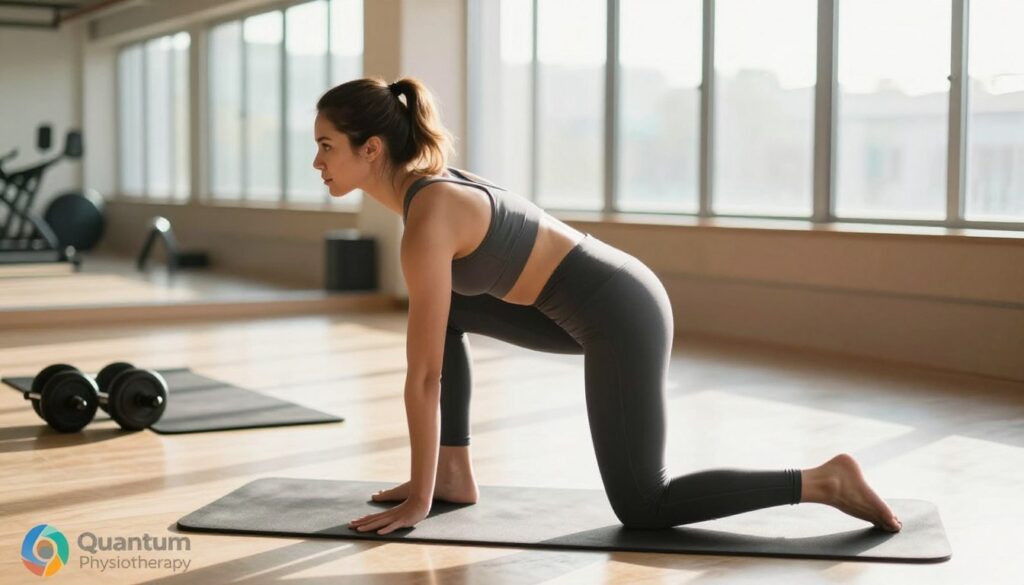
Making daily tasks easier and supporting long-term mobility
Improved capacity makes standing from a chair, climbing stairs and lifting groceries feel less tiring.
That means more independence as you age and fewer limits on travel or hobbies. Short sessions fit into busy schedules across India and need little space.
Balance, fall prevention, and healthy ageing
Working the hips, legs and core improves balance and confidence on uneven surfaces. Better control reduces the risk of falls and keeps you active for longer.
Heart health and mental wellbeing benefits linked to stronger muscles
Regular work around the big lower joints helps the body move efficiently. That lowers strain on the heart and circulation and supports mood.
- Joint‑friendly mechanics protect the knees and hips by improving alignment and control.
- Careful technique can ease pressure on the back; stop if pain rises and modify the plan.
How often to do strength training and how to plan your week
Plan your week so short, regular sessions add up to clear gains without overwhelming your schedule. NHS-style guidance advises working on strength at least twice a week, leaving at least one full day for recovery between sessions.

At least twice each week with recovery
Do strength work two non-consecutive times a week (for example, Monday and Thursday). This spacing gives recovery time so the body adapts and reduces overuse soreness.
Combine this with aerobic activity
Keep 150 minutes a week of moderate aerobic activity, such as brisk walking. Short walks on other days pair well with focused sessions and make the overall routine balanced.
- Simple weekly plan: Two non-consecutive strength days (e.g., Monday/Thursday) plus brisk walks on three other days.
- Time-efficient option: 20–40 minute sessions at home, with 10–15 minute walks between sessions.
- Frequency rules: If soreness is high or form breaks down, reduce volume. If moves feel easy and controlled, add a bit more work.
- Levels: Beginners: start with two times weekly. Returning: two to three times. Regular exercisers: three times with varied load.
Track progress by noting the day trained, the routine you followed and reps completed with good form. Small records make steady progress simple and visible.
Form and safety essentials before you start
Before you begin, a few practical safety rules will keep each session safe and useful. Make sure you know how to breathe, move with control and set up a safe space at home.
Breathing and blood pressure: avoid holding your breath
Key rule: exhale during the effort phase and do not hold your breath. This reduces sudden rises in blood pressure. If you cannot speak normally while doing a set, pause and rest — the simple talk test keeps intensity sensible.
Slow, controlled movements and a simple tempo to follow
Use a repeatable tempo: count 2 seconds to lift or push, then 2 seconds to lower or release. Prioritise smooth, slow movements over speed. This keeps joints safe and improves control of the movements.
When to pause, modify, or seek medical advice
Stop or modify if you feel sharp pain, dizziness, unusual breathlessness, worsening joint pain, numbness or tingling. Seek medical advice if you are new to activity or manage a health condition. Make sure you listen to your body and adjust accordingly.
Setting up your space at home: floor, chair, wall, and stable support
Choose a non-slip floor area and a firm chair placed against a wall. Keep a clear wall space and a stable worktop or table to use for balance.
- Place your hands lightly on a worktop for balance when needed.
- For a sit-to-stand, use hands on your thighs to assist and steady the motion.
- Stop before form breaks: stable posture and controlled range of motion indicate good technique.
Muscle strengthening exercises you can do at home without equipment
You can train full-body control with familiar moves done at home, using only a chair, a wall or the floor.
Lower body staples
Heel raises: stand near a support, rise onto the toes, lower slowly. Progress to single-leg when stable.
Sit-to-stand: start from a firm chair. Push through the feet, stand tall, then sit with control. Move to a shallow squat or hover when confident.
Split squat & glute bridge: hold support for balance and dip gently; glute bridges lie on the floor and lift hips, keeping feet hip-width.
Hips and thigh control for stability
Standing side leg lifts: keep the torso upright, lift to ~30° without leaning. A seated option helps if balance is limited.
Clock pattern: stand on one foot and move the other foot from 12 to 6 and back. Repeat about ten times to train hip control and coordinated leg movement.
Upper body using a chair or wall
Chair dips: place a sturdy chair against a wall, hands on the seat edge, lower with bent elbows and keep the body straight. Progress by straightening legs or lowering deeper.
Wall push-ups: hands on the wall or a lower stable surface; keep a straight line from head to heels and bend elbows slowly as you lower.
Seated options for shoulders and arms
Forward punches, biceps curls, upright rows: sit upright and move with control. Use water bottles or cans to add load when ready.
“Good foot placement and steady ankle control reduce wobble and help safe progression to single-leg moves.”
| Move | Main target | Simple progression |
|---|---|---|
| Heel raise | Calf & feet | Double-leg → single-leg |
| Sit-to-stand / Squat | Quads, glutes | Chair → hover → full squat |
| Split squat | Single-leg control | Hold support → reduce support |
| Glute bridge | Hips, posterior chain | Both legs → single-leg |
| Wall push-up / Chair dip | Push strength (arms, chest) | Wall → lower surface → floor |
- Feet and ankle awareness: keep a stable base; small lifts aid balance and alignment.
- Build a balanced session: pick 4–6 moves from different groups and repeat 1–3 sets of 8–15 controlled reps.
How to build a routine: reps, sets, and progressions that work
Start with a clear, repeatable framework so every session builds on the last. Pick 6–10 moves that cover legs, hips, core and upper body. Aim for 8–15 repetitions per move and complete 1–3 sets depending on time and experience.
How many repeats and when to increase volume
When you can finish all reps with slow control and normal breathing, increase the load. Add a set first, then extra repetitions, or choose a harder variation.
Progressing safely using household items and light kit
Begin with body weight. Next, add household weight such as water bottles or unopened cans, then resistance bands and finally dumbbells or small weights.
Progressions include single‑leg heel raises, deeper chair dips and lower push‑up surfaces like a worktop or table.
Adjustments for knees, back, shoulder and balance
For knee pain, reduce range and keep the knee aligned with the toe. For back sensitivity, keep a neutral spine and limit bending. If the shoulder pinches, change hand angle or reduce depth.
To aid balance, use a wall or worktop for light support, widen your base and slow the tempo before adding load. Listen to the body and stop if joint pain sharpens.
“Progress slowly, keep form, and choose small increases over big jumps.”
Bring it all together and start stronger today
Finish each session by checking that every rep begins and ends in a clear, repeatable starting position.
Simple weekly plan: two targeted strength sessions, one mixing lower body, upper body and stability, plus brisk walks on other days. Keep sessions short and regular.
Form-first checklist: take a stable stance (often shoulder-width apart), use a slow controlled tempo, and always return to the starting position with control. Lower toward the ground steadily and avoid collapsing to one side.
Session flow: a brief warm-up, main moves with short rests, then a final check that each rep returns to the same position. Pick a start point — beginner, returning or consistent — and repeat the plan for several weeks before big changes.
Measure progress by smoother movement, more repeat times and better control rather than heavier loads.