
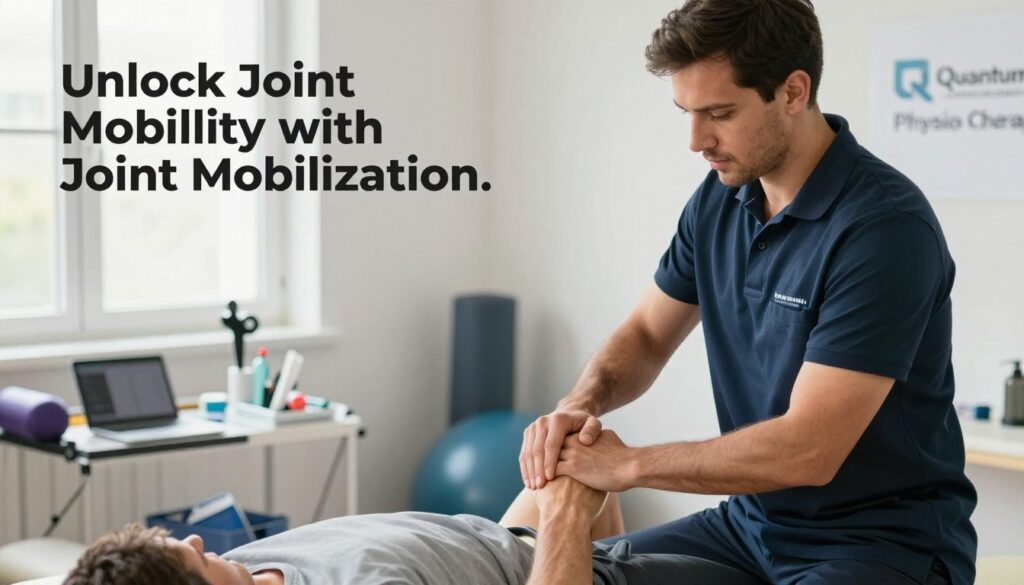
Joint mobilization is a clinician-delivered, hands-on approach used by qualified physiotherapists and, in some settings, chiropractors to ease stiffness and improve movement and comfort in a sore area.
Sessions can bring quick pain relief and better range of motion, often felt right after treatment. Results may be temporary unless the therapist adds targeted exercises and practical activity changes to the plan.
Credentials matter for safety. A proper assessment decides if this form of care suits your joint, symptoms and goals. This guide explains stiffness, what to expect during treatment, technique options, grades, body areas, session expectations, aftercare and how to choose a therapist.
Our promise: help you see how joint mobilization fits into a practical plan to restore range, reduce pain and return to daily activities with confidence, while noting it is not a one-size-fits-all solution.
Key Takeaways
- Mobilization is a hands-on treatment used by trained clinicians to ease pain and improve movement.
- Relief and range gains can be immediate but may not last without follow-up exercises.
- See a qualified physiotherapist or accredited chiropractor for safe assessment and care.
- The guide covers techniques, session expectations and sensible aftercare.
- Assessment determines if this approach suits your symptoms and daily goals.
Why joint stiffness happens and when joint mobilisation can help
When a part of the body loses easy movement, everyday tasks become harder and more tiring. Restricted motion often begins after an injury, prolonged sitting, surgery, overuse or arthritis-related change. People may guard the area and use muscles differently, which reduces normal movement.
How restricted motion affects movement and daily life
Limited range changes simple actions such as reaching overhead, walking, squatting or turning the head. These changes cause compensations that overload nearby joints and tissues. Patients often describe a “blocked” feeling, extra muscle tension and pain that spikes at certain angles or under load.
The link between dysfunction, inflammation and pain sensitivity
Dysfunction may fuel local inflammation and make tissues more sensitive to pressure and movement. Irritated structures become more excitable, so even light loading can produce pain. A clinician will screen for red flags and choose gentler approaches when symptoms are irritable rather than forcing end positions.
When mobilisation can help: it is useful when stiffness and pain stem from reduced accessory movement or a mechanical restriction, not when the structure is unstable or acutely damaged. Typical clinic examples include a stiff neck that limits driving checks, an ankle after a sprain that makes stairs hard, and a knee that feels tight during sit-to-stand.
What joint mobilization is in physiotherapy and manual therapy
Controlled, hands-on care involves a clinician applying passive movement to restore normal glide and play in a stiff area. A physical therapist or experienced practitioner stabilises one segment and applies force to the adjacent segment in the direction of tightness.

Hands-on treatment: stabilisation, direction of force, and controlled pressure
Stabilisation means the therapist “locks” one part to prevent unwanted motion while targeting the restricted glide with the other hand.
Direction matters: force is applied toward the limited movement component to address the specific restriction.
Controlled pressure is graded to match irritability and comfort. The clinician uses gentle oscillations or firmer, brief thrusts depending on the chosen technique and the patient’s response.
Joint vs soft tissue: how mobilisations support muscles, ligaments, and surrounding tissue
This manual therapy approach focuses on the articulating surfaces, but it also eases muscle guarding and improves how muscles support the area.
Surrounding structures — ligaments, capsule and tendons — influence stiffness. Mobilisation aims to improve mechanics without aggressively stretching all tissue.
| Aspect | What the therapist does | Expected effect |
|---|---|---|
| Stabilisation | Immobilise one segment while treating the other | Targets specific glide/slide restriction |
| Direction of force | Apply force toward the restricted motion | Restores functional range |
| Controlled pressure | Grade intensity to comfort and irritability | Reduces pain flare and avoids tissue overload |
| Soft tissue interaction | Combine with muscle or fascial techniques if needed | Less guarding, better muscular support |
How joint mobilization works to reduce pain and improve range of motion
A targeted manual approach can calm overactive pain signals and give immediate, usable gains in motion.
Desensitising the area: why pain can ease after treatment
Hands-on treatment may lower local sensitivity so the area responds less to pressure. This means everyday movement feels easier and less threatening.
Muscle behaviour changes as well: when tissues are less excitable, surrounding muscles relax and support the limb more normally.
Blood flow, lubrication and synovial fluid
Gentle glide can increase local circulation and reduce irritation. Increased flow helps clear metabolic by-products and prepares tissues for activity.
Small gains in synovial distribution often feel like less “sticky” stiffness and can temporarily improve range motion.
Proprioception and balance reactions
Improved sensory input sharpens body awareness. Better feedback helps balance reactions and coordination as movement returns.
How to use the window: practise the prescribed exercises straight after treatment to lock in gains. Expect quick improvements, but reinforce them with progressive rehabilitation.
| Mechanism | Short-term effect | Practical tip |
|---|---|---|
| Desensitising neural input | Less pain, easier movement | Move gently within comfortable limits |
| Increased blood flow | Reduced local irritation | Begin light activity soon after |
| Improved proprioception | Better balance reactions | Include balance and control drills |
Joint mobilisation techniques therapists use in clinic
Clinicians select approaches that match symptom behaviour, comfort and the tissue response during testing. The aim is to reduce pain, ease stiffness and create a usable window for exercise.

Oscillation mobilisations for early-range pain relief
Oscillatory methods use rhythmic, gentle movements at low velocity and small to variable amplitude. They are ideal when pain is the dominant symptom and stiffness appears early in the range.
Short bouts are repeated with quick re-checks to confirm reduced pain and improved ease of movement.
Sustained holds to reduce compression and lengthen tissues
Sustained holds apply a steady pull or glide and are held for a set time to lessen compression and slowly lengthen restricted tissues. This technique uses less speed and more sustained direction of force.
Thrust manipulation: high-velocity, small-amplitude use
Thrusts are single, quick, high-velocity and low-amplitude moves at end range. They are considered only after screening and when safety and patient tolerance are clear.
Choosing the right technique
Therapists judge irritability, watch symptom changes and ask for patient feedback during treatment. Start gently when symptoms are reactive and progress intensity only if pain stays controlled and function improves.
Understanding grades of mobilisations and what they’re for
A clear grading system helps therapists choose how far and how fast to move a stiff area. The grade system standardises the process so force, amplitude and where in the range work together with the clinical goal.
Small amplitude vs large amplitude
Small amplitude moves are brief and gentle. They are useful when pain is high and comfort is the priority. These motions calm sensitivity and restore confidence to move.
Large amplitude moves cover more distance. They suit stiffness-focused goals when the tissue tolerates more stretching. Therapists choose large amplitude to address physical restrictions rather than pain alone.
Within-range versus end-range
Within-range work aims to ease pain and re-establish normal motion without pushing to a limit. End-range work targets capsular or tissue limits that stop full movement.
Grade I to Grade V: plain-English aims
- Grade I: small, slow oscillations at the start of range for pain relief.
- Grade II: larger slow forces within available range to assess and ease movement.
- Grade III: large amplitude focused into mid-to-end range to stretch restriction and improve range.
- Grade IV: slow, small amplitude at end range to refine play and lengthen tight tissue.
- Grade V: a single high-velocity, small-amplitude thrust at end range; distinct from other grades and used selectively.
“Grades are selected based on irritability, stage of recovery and response — not ‘higher is better’.”
Clinician logic: choice of grade reflects symptoms and healing stage. Grade V is not required for most outcomes. Many plans succeed with Grades I–IV plus targeted exercise.
Practical tip: ask your therapist which grade they are using and why. That improves understanding and consent for the treatment process.
Where joint mobilisations are commonly applied across the body
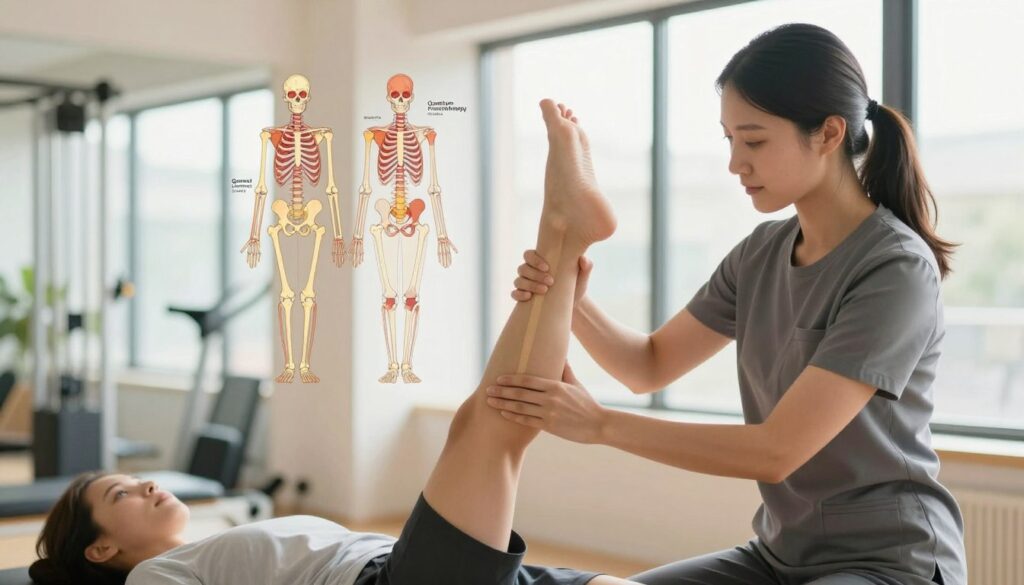
Practitioners use hands-on techniques across many body regions to target the specific restriction and restore usable motion. Each area has unique accessory movements a physical therapist assesses and treats.
Shoulder and neck
Stiffness here often limits overhead reach and turning the head. Gentle mobilisation can ease pain and improve shoulder lift and neck rotation so daily tasks become simpler.
Knee and inner knee pain
For knee osteoarthritis and inner knee discomfort, targeted work may improve joint function and usable joint range. This often helps with walking and stair negotiation.
Ankle and foot
After sprains or with plantar fascia-related restriction, restoring dorsiflexion and foot mechanics is key. Improved range reduces compensatory patterns and makes walking easier.
Back and spine
Clinicians address painful, stiff segments that limit bending and rotation. Careful screening for red flags comes first; then graded techniques help reduce local pain and restore motion.
Wrist, hand and fingers
Limited joint range in the hand alters grip, writing and fine tasks. Brief, region-specific approaches support hand therapy and improve function when combined with exercises.
Note: direction, stabilisation and grade differ by region. Techniques must be individualised and used alongside exercise rather than copied from online videos.
What to expect in a joint mobilization session
A typical session focuses on safe assessment, precise positioning, and measured hands-on treatment. The clinician will explain each stage and invite questions before they begin.
Assessment first: checking range, end feel and accessory movement
The visit starts with testing active and passive range to find limits and symptom behaviour. The therapist then assesses end feel to decide if stiffness or irritability is present.
Accessory movement testing looks at roll, slide and spin — small motions the patient cannot do alone. These tests guide the application and direction of treatment.
Positioning and stabilisation
Careful positioning isolates the target and protects nearby tissues. The clinician stabilises one segment while adjusting angles and supports to find the safest line of force.
Applying force safely
Force is applied with controlled intensity and speed, directed to the specific restriction. The therapist checks constant feedback so discomfort stays acceptable and pain does not flare.
Re-checking motion
After each set the therapist re-assesses range of motion and pain to confirm progress. Small measurable changes often appear quickly, helping plan the next steps in the process.
How long improvements last and why results can be short-lived
Many patients feel immediate relief and better range. Gains can be brief unless reinforced with prescribed exercises and gradual loading over time.
Speak up if you feel sharp pain, pins and needles, dizziness or an unusual headache — these signs need immediate modification or stopping of the treatment.
Step-by-step aftercare to maintain gains in joint range and movement
Small, repeated movements at home are the key to making therapy improvements last. Start the prescribed movements soon after your session while the area is calmer. This keeps the new range and reduces stiffness returning over time.
Gentle home movements in the restricted direction
Do slow, pain-free repetitions toward the previously restricted direction. Aim for sets of 5–10 gentle moves, two to four times a day.
Tip: stop if you feel sharp pain, pins and needles, or swelling increases, and contact your therapist.
Stretching versus strengthening
Stretching targets short, stiff tissue to lengthen it and help improve range. Use mild, sustained holds that settle quickly rather than aggressive stretches.
Strengthening teaches muscles to use the new movement safely. Begin with isometrics, then progress to controlled concentric/eccentric reps as symptoms allow.
How often to practise
Short sessions spread across the day work better than a single long slot. Multiple low-dose inputs help tissues adapt and reinforce control during normal activity.
- Practical progressions: isometrics → 8–12 slow reps with light resistance → functional reps (e.g., sit-to-stand, wall push-ups).
- Area examples: shoulder—coduction and resisted external rotation; knee—mini-squats and straight-leg raises; ankle—dorsiflexion drills; hand—finger extension and pinch holds.
Track response daily: note pain level, ease of movement and any swelling. Share trends with your therapist so treatment and therapy can be adjusted to convert short-term gains into lasting function.
Safety first: risks, contraindications, and when to avoid mobilisation
Before any manual technique is used, clinicians must rule out conditions that raise treatment risk.
Do not proceed without medical advice
Stop and seek medical review if you have suspected or confirmed fractures, an acute disc herniation with severe symptoms, low bone density or osteoporosis, marked sensory loss, or a diagnosed hypermobility disorder.
Use extra caution
Practitioners take extra care for patients on anticoagulants, those with uncontrolled diabetes, atherosclerosis, aneurysm or other vascular disease. These conditions change risk and may alter the choice of technique or require medical clearance.
What risk looks like
Warning signs include worsening symptoms, new neurological signs (numbness, tingling, weakness), unexpected bruising, or excessive pain during or after treatment. Report these immediately so the plan can be adjusted.
| Concern | Why it matters | How a physical therapist reduces risk |
|---|---|---|
| Fracture/osteoporosis | Bone fragility increases harm | Avoid end-range thrusts; use very low-grade, gentle options |
| Vascular / anticoagulant use | Bleeding or vascular compromise risk | Lower intensity, monitor for bruising, seek medical clearance |
| Neurological signs | May indicate nerve compromise | Stop treatment, obtain urgent assessment and imaging |
Shared decision-making is essential. Ask what technique is planned, what you should feel, and which warning signs mean stop. Avoid self-applied aggressive approaches from online videos; professional assessment and therapy keeps you safer.
Getting better outcomes by combining mobilisation with physiotherapy treatment
Combining hands-on techniques with targeted exercise gives better, longer-lasting results than either alone. Mobilisation creates a short window of reduced pain and improved motion. Without follow-up, gains often fade.
Why therapists pair manual care with exercise and soft tissue work
Therapists use gentle hands-on input to desensitise the area so surrounding muscles can work more normally.
Exercise therapy—mobility drills, motor-control practice and progressive strengthening—teaches muscles to support the limb through the new range.
Soft tissue techniques help when protective muscle guarding limits motion or alters mechanics.
Progression over time: building mobility into strength and function
Therapists follow a staged process and re-assess each visit rather than repeating the same technique indefinitely.
| Stage | Goal | Typical focus |
|---|---|---|
| 1. Symptom calming | Reduce pain, allow movement | Low-grade hands-on care, gentle movement |
| 2. Mobility restoration | Improve range | Targeted mobility drills, soft tissue work |
| 3. Strength through range | Build support | Progressive resistance, motor control |
| 4. Function & conditioning | Return to work/sport | Functional loading, endurance, sport-specific drills |
Practical outcome: better stair climbing, longer walking tolerance, easier overhead tasks and improved grip confidence when techniques are combined into a coherent therapy plan.
Moving forward with confidence: choosing the right therapist and tracking progress
Choosing the right clinician puts you in control of recovery and long‑term function.
Checklist for India: verify physiotherapy qualifications, expect a clear assessment, and look for a plan that explains the technique, grade and home exercises rather than passive treatment alone.
Ask: which grade will you use, why this amplitude, is work within‑range or at end‑range, and what change in range motion and pain should I expect today?
Track progress with simple measures: range in degrees or visible reach, ease of key tasks (overhead reach, stair descent, dorsiflexion, grip), and pain scores during those movements.
Good soreness is short‑lived and improves with movement; report worsening pain, numbness, new weakness or swelling promptly.
Next step: book an assessment, bring prior scans or notes, and commit to a short daily routine to keep gains between visits.