

Small setbacks can change the path of healing, but the right choices early on set the stage for safer, long-term gains.
This guide explains a staged, evidence-informed approach that puts safety and function first rather than quick fixes.
It is written for people in India dealing with common sprains, strains or bruises, those post-surgery, and anyone returning to sport or physically demanding work.
What you will follow: assessment → early swelling control (R.I.C.E.) → understanding the healing process → stage-matched treatment → rehabilitation and progressive loading → monitoring and nutrition → prevention for life.
Remember that what helps on day one may hinder later progress. Faster healing is not just pain relief; it is about supporting the body to rebuild tissue capacity and reduce setbacks.
This article supports informed self-care and does not replace clinical assessment. Seek medical advice if red flags appear.
Key Takeaways
- Approach healing in stages, prioritising safety and long-term resilience.
- Early choices affect how well the body rebuilds tissue and returns to life.
- Stage-matched techniques change over time; use them appropriately.
- The guide suits people in India recovering from common injuries and post‑surgery.
- Seek clinical care when warning signs or severe symptoms occur.
Start with the right assessment: diagnosis, safety and next steps
Start with careful evaluation to decide whether protection, movement or specialist care is needed.
Why self-diagnosis can delay healing and increase reinjury risk.
Guessing the problem often leads to the wrong plan. Treating a fracture like a sprain, or ignoring a tendon tear, can prolong pain and limit function.
Many assume no swelling equals no damage. That mistake can hide ligament or bone concerns and slow the healing process.
Red flags that need urgent medical care or imaging
- Unable to bear weight or obvious deformity
- Severe or worsening pain, numbness or tingling
- Loss of function, fever with open wound, or suspected head/neck harm
- Rapid, severe swelling after trauma
Building a personalised plan
A good initial assessment records the event, mechanism (twist, impact, overuse), pain location, range and stability checks.
Clinicians then match treatment to the tissue involved — muscle, tendon, ligament or bone — and the current stage of the healing process.
Use a trained therapist or physical therapist for targeted guidance if pain persists or function does not improve week by week.
Control swelling and pain early with the R.I.C.E. method
Early management focuses on controlling swelling, lowering pain and keeping the affected area supported. Use R.I.C.E. in the first 48–72 hours as a short-term, stage‑matched treatment to limit inflammation and protect tissue.
Rest without “total shutdown” in the first 48–72 hours
Rest the injured area by avoiding painful loading or weight‑bearing. Choose relative rest: protect function but move gently to prevent stiffness and loss of strength.
Ice therapy: timing, skin safety and frequency for inflammation
Apply ice for 15–20 minutes with a thin cloth barrier. Repeat several times daily, most effective within the first 48 hours. Ice reduces pain and swelling by narrowing blood vessels; it does not cure underlying damage.
Compression: how to wrap safely
Wrap from distal to proximal with an elastic bandage. Keep it snug-not-tight. Stop and loosen the wrap if there is numbness, colour change, increasing pain or coldness.
Elevation: positioning above heart level
Keep the affected area raised on pillows above heart level when resting. This helps fluid drain away and complements compression and ice in lowering swelling.
“Use simple, stage-appropriate steps early on — they set the scene for safer, faster improvement.”
| Step | When to use | Key tip |
|---|---|---|
| Rest | First 48–72 hours | Relative rest; avoid painful loading |
| Ice | Several times daily | 15–20 min with cloth barrier |
| Compression & Elevation | Continuously while swelling prominent | Snug wrap; elevate above heart |
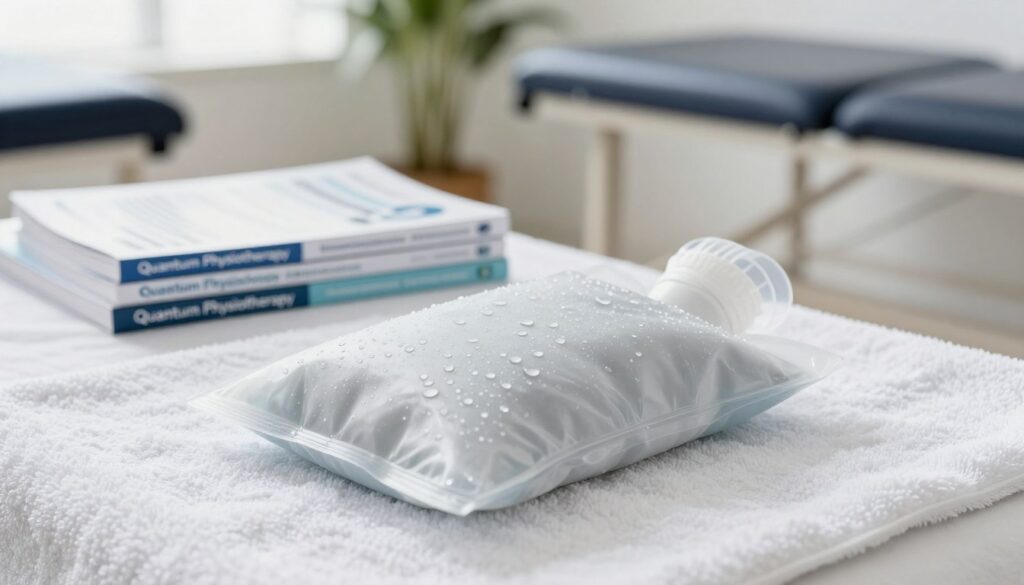
Practical India tip: Use a frozen pack or wrapped frozen peas in a cloth as a safe cold option. Seek clinician review if pain or swelling worsens despite these measures.
Understand the healing process so you don’t rush recovery
Knowing the stages helps you act wisely and avoid setbacks. The body heals in four overlapping phases, not rigid weeks. Think of the process as a relay where each phase hands work to the next.
Bleeding stage: clotting, protection and the first 24 hours
In the first 24 hours the body forms a clot to stop blood loss and protect the damaged area. This clot is a scaffold for the next steps.
Early measures that control excessive bleeding and protect the area set up better long‑term repair.
Inflammation stage: why swelling, heat and pain can be useful signals
Swelling, warmth and pain mean the body has sent blood, oxygen and cells that clear debris and start repair. These signs are useful signals, not always something to erase.
Where needed, the aim is to regulate inflammation so it helps without causing more harm.
Proliferation stage: new tissue, weak strength limits
From around 24–48 hours and lasting up to three weeks, new blood vessels and immature tissue form. The new matrix is disorganised — like loose threads that must be aligned later.
Do not load the area heavily now. Early overloading can undo fragile repair and delay progress.
Remodelling stage: alignment over months (sometimes years)
Over months to years fibres become organised and stronger. Gradual, progressive loading helps the tissue align along lines of force and improve tolerance for sport, work and daily tasks.
What “normal” setbacks can look like
Short-term stiffness after new exercises or mild swelling after extra activity is common. These usually settle within 48–72 hours.
Be concerned by sharp pain, quick increases in swelling, or loss of function — these need clinical review.
“Healing is a process of change — give each stage the time and care it needs.”
| Stage | Timeframe | Key features | What to avoid |
|---|---|---|---|
| Bleeding | First 24 hours | Clot formation, protection | Aggressive load or dissolving clot |
| Inflammation | 24–72 hours | Swelling, heat, blood and immune cells arrive | Complete rest that causes stiffness |
| Proliferation | ~48 hours to 3 weeks | New tissue and blood vessels; immature strength | Heavy loading that disrupts fragile tissue |
| Remodelling | Months to years | Fibres align; strength improves | Rushing full return without graded progression |
Injury recovery: match treatment to the stage of healing
Match care to the body’s stage of healing so you protect fragile tissue early and build strength at the right time.
What matters most now versus later
Acute phase priorities: protect the area, control swelling and maintain safe, gentle movement.
Later priorities: regain strength, motor control, endurance and confidence through progressive loading and targeted therapy.
Immobilisation: when to use it and when to stop
Braces, splints or casts can reduce pain and shield new tissue during early healing. They also help aligned blood vessel growth and connective tissue formation when used for the correct time.
However, keeping a limb motionless for too long risks muscle wasting, stiffness and loss of function that slow later rehabilitation.
- Use short-term immobilisation to protect fragile tissue and lower pain.
- Avoid prolonged immobilisation; begin graded movement as tolerance improves.
- Let a clinician decide timing for higher-risk fractures, ligament tears or post‑surgery cases.
- Reassess promptly if pain spikes, swelling increases, or function drops.
| Phase | Key focus | What to avoid |
|---|---|---|
| Acute | Protection, swelling control, safe motion | Early heavy loading or premature brace removal |
| Subacute | Gradual loading, restore range, begin strength work | Staying in ‘rest’ mode without progression |
| Rehab | Endurance, power, function, guided therapy | Excessive rest leading to muscle atrophy |
“Therapy and graded rehabilitation bridge tissue healing and real‑world function.”
Dosage matters: increase load slowly, monitor symptoms and aim for steady gains rather than sudden spikes that flare symptoms.
Rehabilitation that restores function: physio, mobility and load management
Good rehabilitation moves beyond pain relief to rebuild how you move, lift and work each day.
What rehabilitation aims to restore: usable mobility, range, coordination and strength that transfer to daily movement and tasks.
How a physical therapist guides safe motion and strength work
A physical therapist assesses range and range motion, tests muscle control and sets graded exercises tailored to the tissue involved.
They teach pain‑guided progressions so you stimulate repair without aggravating inflammation or swelling.
Progression principles: stimulate, don’t aggravate
Increase load slowly. Use next‑day symptoms and pain as feedback to adjust reps, intensity and rest.
Short, frequent sessions help muscles adapt and encourage fibre alignment during remodelling.
Prevent stiffness and use mobility aids
Manage persistent swelling with gentle mobilisation, elevation and compression when advised. Excess haematoma can lead to fibrosis and loss of elasticity.
Crutches, frames or poles protect the limb while keeping overall fitness and preventing deconditioning.
Hydrotherapy and low‑impact options
Pool walking, buoyancy drills and light cycling allow earlier leg loading with reduced stress. These exercises support circulation and muscle activation when full weight bearing is limited.
“Personalised physical therapy, progressed over time, restores function not just comfort.”
Return to activity gradually: rebuild strength, flexibility and confidence
A gradual plan helps you regain strength, flexibility and the confidence to move safely. Begin only once early swelling and sharp pain have reduced and basic control is present.

Gentle movement first: stretches and pain-free motion
Start with short, pain-free stretches and light movement to support blood flow and limit stiffness. Gentle range work maintains mobility without stressing tissues.
Increase activity level without triggering swelling
- Phase 1 — Pain-free motion and control.
- Phase 2 — Low-load exercises and longer duration.
- Phase 3 — Gradual speed, load and impact as tolerated.
Practical rules: change one variable at a time (duration, intensity or frequency). Monitor symptoms for 24 hours. If pain or increased swelling appears, reduce the load and rest.
| Example | Stepwise plan | Level goal |
|---|---|---|
| Runner | Walk → walk‑jog → continuous jog | Continuous jogging without sharp pain |
| Warehouse worker | Light lifting → controlled lifting → full workload | Endurance for a full shift |
Sport and work readiness: markers of control and endurance
- Stable joint control in direction changes.
- Good strength for task-specific moves.
- No sharp pain during or after activity.
- Endurance to complete a full session or work shift.
“Graded exposure rebuilds confidence — fear of return is normal and improves with steady, measured progress.”
Pain management and recovery monitoring throughout the process
Knowing how to use pain signals and simple monitoring tools guides safer, steady progress.
Using OTC medicines responsibly and when to seek care
Over-the-counter options such as ibuprofen or acetaminophen can reduce discomfort and help you remain active. Follow the label dosing and avoid prolonged use without clinician input.
Do not use anti-inflammatories long term if you have stomach, liver or kidney concerns. Seek medical advice for severe or worsening pain after an operation or if you have other health conditions.
Track symptoms to guide progression
Use pain as information: accept mild, dull “rehab discomfort” but watch for sharp pain, night pain, increasing swelling or new numbness. These are warning signs that need review.
- Rate pain, stiffness, fatigue and sleep quality each day.
- Note function: walking, lifting or work tasks completed.
- Use a simple checklist: during activity / 2 hours after / next morning.
| Check | Sign to progress | Action |
|---|---|---|
| During activity | Pain ≤3/10, steady control | Maintain or slowly increase load |
| 2 hours after | No sharp increase or swelling | Keep plan |
| Next morning | No new limitations | Consider small step up |
When to see a clinician
Contact a clinician if symptoms fail to improve with time, repeat flare-ups occur, pain stops basic function, or if you have concerns after surgery.
“Use sensible pacing, micro-breaks and the right techniques for heat or cold — simple steps protect progress.”
Fuel tissue repair: nutrition and hydration for faster healing
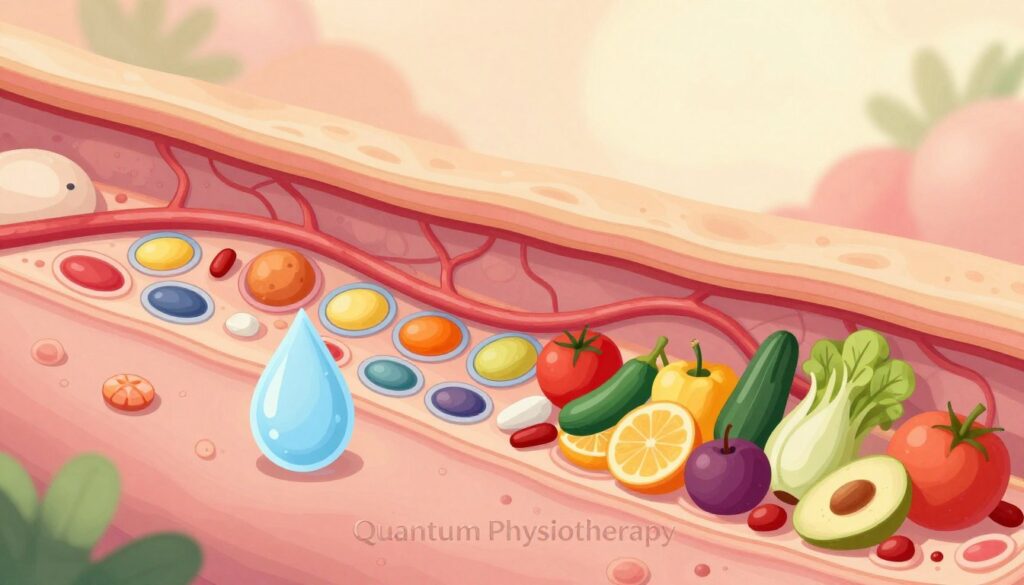
A practical diet helps the body prioritise repair. Fueling tissue repair needs steady protein, targeted micronutrients and enough fluid to carry nutrients where they are needed.
Protein for muscle and tissue repair: practical food options
Protein supplies amino acids that rebuild muscle and connective tissue. Aim for regular servings across the day to support repair and prevent muscle loss while activity is reduced.
- Common Indian options: eggs, dal and lentils, paneer, curd/yoghurt.
- Also include lean chicken, fish, soy products and mixed nuts for variety.
- Combine pulses with rice for a complete amino acid profile when meat or fish are limited.
Key nutrients for healing
Vitamin C (oranges, guava, bell peppers, broccoli) helps collagen formation for stronger tissue.
Vitamin A (sweet potato, carrots, spinach) supports immune cells and tissue regeneration.
Zinc (seafood, chickpeas, whole grains) aids wound closure and cellular repair.
Omega‑3 fats (mackerel, sardines, flaxseed) help balance inflammation and support quality repair.
Hydration habits that support circulation and recovery
Water maintains cell function and helps deliver nutrients to damaged tissue. In hot climates drink regularly rather than waiting for thirst.
Use urine colour as a simple check: pale straw indicates adequate hydration; dark suggests you should drink more.
What to limit and why
Limit alcohol — it can slow tissue repair and affect sleep. Cut excess sugar and ultra‑processed foods because they worsen inflammation and undermine long‑term health.
Choose steady, sustainable changes rather than short‑term ‘superfood’ fixes. A balanced, protein‑rich diet combined with good hydration supports faster, higher‑quality healing over time.
“Nutrition and fluids are not extras — they are core parts of tissue repair and sustained health.”
Recover stronger for life: protect your gains and reduce future injuries
Maintaining simple strength and mobility habits turns short-term care into lasting resilience.
Do not assume feeling pain‑free means full healing. Remodelling takes time and muscles often need more strength and control than symptoms show.
Keep a maintenance plan: 2–3 weekly sessions of targeted strength, mobility and warm‑ups before sports or manual work. Gradual progression after breaks prevents setbacks.
Prioritise sleep and sensible rest. Good sleep boosts tissue repair and helps muscles adapt after exercise or surgery.
If swelling or new pain appears, use short‑term ice and reduce load. Book an appointment with an orthopaedic clinic or physical therapy service for recurring problems or slow progress.
Build function, not haste: aim for stable range of motion, confident single‑leg control where relevant, and endurance for daily activities. This way, injury recovery becomes lasting fitness for life.