
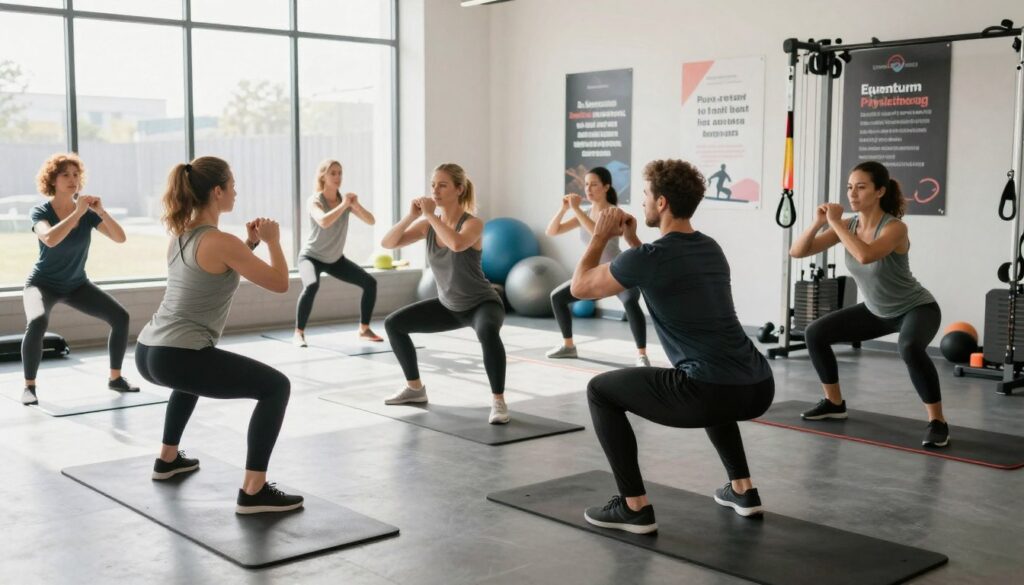
Functional movement training teaches your body to move with ease in daily life and sport. It focuses on multi-joint patterns that improve strength, range of motion and long‑term health. This is not only about lifting heavier in the gym but about usable strength for real tasks.
Expect clear guidance on what “functional” means, how key patterns work, and how to build a short, repeatable routine. You will learn drills that ease stair climbing, make lifting water cans and luggage safer, and help posture at a desk.
The article takes a performance angle: better quality of movement and coordinated strength can boost speed, power and control in sport and daily tasks. It suits beginners who want pain‑free motion, busy professionals seeking time‑efficient workouts and athletes chasing transferable strength.
Structure: fundamentals → benefits → patterns → comparisons → safety → routine building → takeaways. Read on to start a practical, step‑by‑step approach for improved fitness and confident, everyday movements.
Key Takeaways
- Practical gains: smoother stairs and safer lifting.
- Who it helps: beginners, busy professionals and athletes.
- Focus areas: multi‑joint patterns and range of motion.
- Performance boost: improved speed, power and control.
- What to expect: a simple routine you can repeat.
What functional training is and why it matters for everyday life in India
Everyday chores in India demand a different kind of strength — the kind that matches how you actually move.
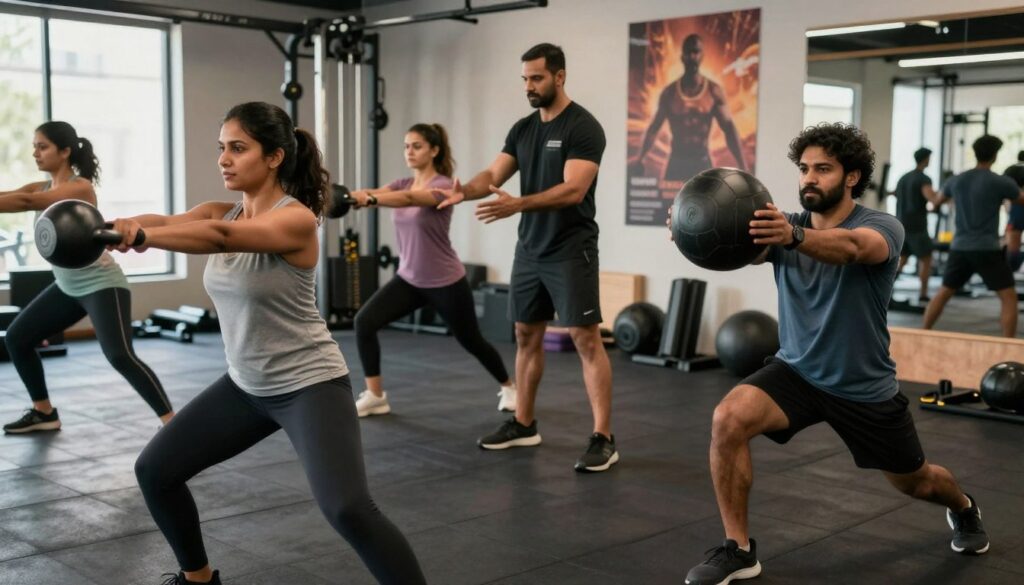
Functional training prepares the body for common tasks: lifting a 20-litre water can, carrying vegetable bags upstairs, picking up a child, shifting luggage at a railway station or steadying yourself on a crowded metro.
Real tasks mirrored by simple skills
Think of movements as practical skills: bend, squat, hinge, push, pull and carry. These mimic daily life more than isolated gym lifts. Practising these skills improves the way you handle routine work.
Why multi-joint patterns matter
Movement patterns link hips, knees, spine and shoulders so several muscle groups work together. Legs + core + back + shoulders share the load when you lift or carry, which is closer to real life than single‑muscle exercise.
Mobility, control and long-term health
First, access the range of motion. Then, control that range. Finally, produce strength through it. This sequence improves motor control and posture.
Better mechanics reduce wear and tear, make daily life easier and support quality of life as you age. The best way to improve capability is to practise real patterns and then add progressive load.
| Common Indian task | Primary pattern | Key muscle groups |
|---|---|---|
| Carrying a 20-litre can | Carry / squat | Legs, core, shoulders |
| Climbing stairs with bags | Step-up / hinge | Hips, quads, glutes |
| Picking up a child | Hinge / lift | Back, core, legs |
| Handling luggage at stations | Push / pull / carry | Shoulders, back, grip |
Benefits of functional training for strength, fitness and performance
You gain quicker stability and resilient strength that helps with stairs, uneven pavements and sudden changes of direction. This section summarises the main benefits in practical terms.
Better balance and stability
Coordinated muscle groups work across different planes to steady the body. That balance helps on uneven pavements, while carrying bags or making quick turns.
Lower injury risk
Improved posture and correct form reduce common issues such as low‑back strain when bending or lifting. Bracing and motor control protect joints and prevent needless wear.
Transferable strength and efficiency
Functional strength transfers to daily life and sport: carrying shopping, lifting luggage or pushing a heavy door with confidence. Compound drills build core stability to link upper and lower body.
Time‑efficient workouts and higher energy use
Compound exercises train many muscles at once, saving time and often increasing calorie burn. Shorter workouts can boost overall fitness and support body composition goals.
| Benefit | Practical effect | Where it helps |
|---|---|---|
| Balance & stability | Fewer slips and better control | Stairs, uneven ground, sport |
| Lower injury risk | Safer bending and lifting | Household tasks, work |
| Functional strength | Usable power for daily tasks | Carrying, pushing, pulling |
| Time efficiency | More result per session | Busy schedules, gym alternatives |
Functional movement training fundamentals: movement patterns and muscle groups
Start with core patterns and you’ll cover almost every daily task with fewer, smarter exercises.
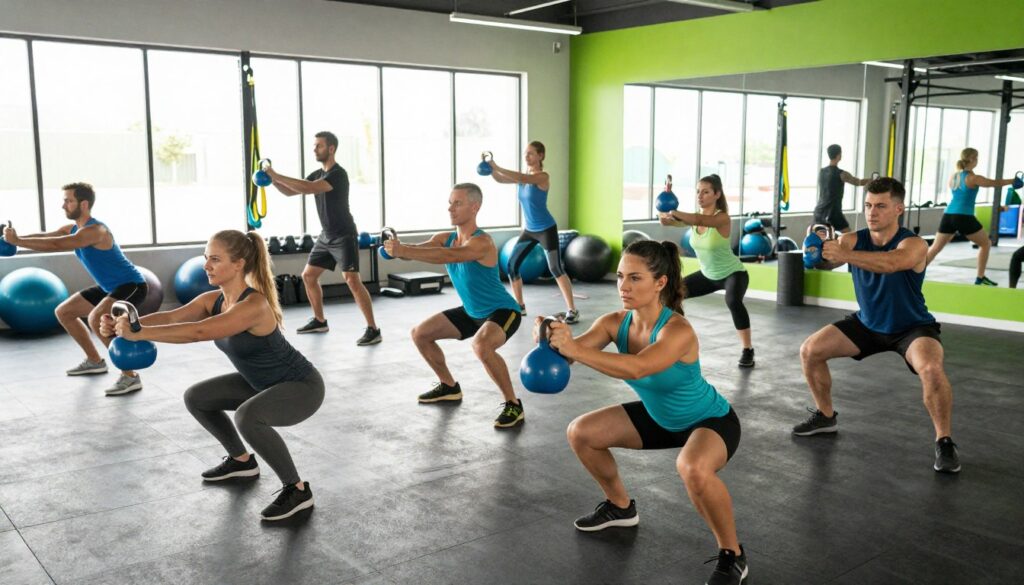
Squat pattern for legs, glutes and core stability
The squat trains legs, glutes and core to control the vertical motion of sitting and standing.
It mirrors tasks such as rising from floor level or lifting a bucket in an Indian home.
Hinge pattern for posterior chain strength and safe lifting mechanics
The hinge recruits hamstrings, glutes and the lower back.
Hinging with the hips back, a neutral spine and the load close to the body is the safest way to lift weight from the floor.
Push and pull patterns for upper-body strength and shoulder health
Pair presses with rows to balance shoulder muscles and posture.
This pairing counters long sitting spells and supports better upper-body alignment.
Lunge and single-leg work for balance, hips and knee stability
Unilateral exercises improve balance and hip control.
They help with stairs, stepping onto kerbs and stabilising the knee under load.
Rotation and anti-rotation for trunk control and spine-friendly motion
Controlled twisting and resisting twist build trunk strength and protect the spine during everyday turns and lifts.
Carry patterns for grip, posture and total-body tension
Farmer carries or suitcase-style holds train grip, posture and whole-body tension—useful for bags, water cans and luggage.
- Pattern-first framework: squat, hinge, push, pull, lunge, rotate and carry keep programmes balanced.
- Many of these exercises work well with bodyweight, dumbbells or kettlebells.
Functional training vs traditional strength training, HIIT and sport-specific routines
Different session types deliver different outcomes — understand the trade-offs and how to combine them. This helps you pick the right plan for daily life, fat loss or peak sport performance.
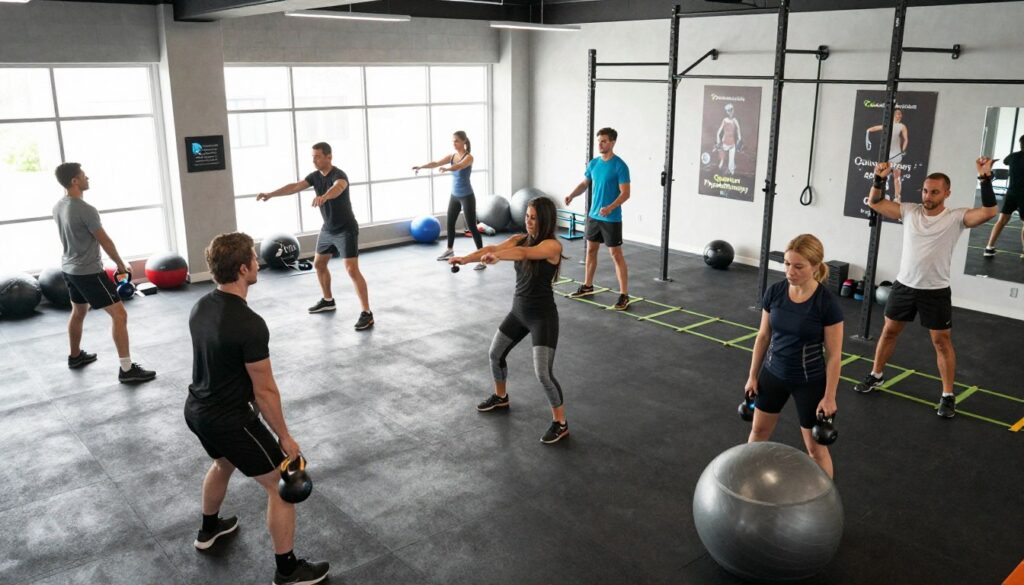
Why quality of motion comes first
Functional work prioritises coordination and how you move under load. Coaches cue posture, timing and joint control so patterns transfer to real tasks.
How HIIT compares
HIIT is shorter and higher intensity. It targets cardiovascular fitness and calorie burn rather than refined motor skill or long‑term joint control.
Fitting sessions into a gym week
You can combine methods without overloading. For example, try two skill sessions, two heavy gym days and one HIIT day in a week.
| Type | Core aim | Format | Best for |
|---|---|---|---|
| Functional | Movement quality & transfer | Compound, multi-joint drills | Daily tasks, injury prevention |
| Traditional strength | Progressive overload | Heavy sets, occasional isolation | Maximal weight, hypertrophy |
| HIIT | Cardio power & conditioning | Short intervals, high intensity | Fat loss, stamina |
| Sport-specific | Skill and performance | Drills, plyometrics, tempo work | On-field speed and skill |
Simple decision guide: pick skill work for durability, heavy gym days for strength, and HIIT for conditioning. Blend these in ways that respect recovery and total work.
How to perform functional exercises safely with the right form
Prioritising technique helps you progress from bodyweight to kettlebell and dumbbell work safely. Use a clear hierarchy: form first, then range of motion, then load and finally speed. This reduces injury risk while you improve strength and control.
Posture, bracing and controlled range
Stack ribs over pelvis, breathe into the belly and create steady trunk tension before each repetition. Keep the spine neutral and move within a range of motion you can control well today.
Progressions and regressions
Start with bodyweight patterns such as push‑ups and bodyweight squats. Add a dumbbell for goblet squats or rows, then progress to a kettlebell for swings or suitcase deadlifts.
Use lighter weight or partial reps to regress. Aim for 3 sets of 8–12 reps as a general guideline for many exercises.
Common errors and quick fixes
Squat errors: knees caving or a rounded back. Fixes: cue knees out, chest up and use a lighter weight. Hinge errors: bending the spine instead of hinging at the hips; correct by practising hip push‑backs with no weight.
Overhead issues: raised ribs, shrugged shoulders or an unstable arm path. Regress to presses from the front rack or floor until mobility and shoulder control improve.
When to slow down or seek help
Stop or reduce load for sharp pain, persistent fatigue or repeated form breakdown. Seek a coach for movement assessment when unsure, especially before adding heavy weight.
How to build a functional workout routine you can stick to
Build a short, reliable routine that balances strength, stability and everyday skills in each session.
Structuring repeatable sessions
Plan every session around push, pull, squat, hinge, lunge, rotate and carry. Choose one exercise for each pattern so sessions stay balanced and simple.
Sample workout (example)
- Push: Push-up — 3 sets of 8–12 reps (rest 60s)
- Pull: Dumbbell bent-over row — 3 sets of 8–12 reps (rest 60s)
- Squat: Kettlebell goblet squat — 3 sets of 8–12 reps (rest 60s)
- Hinge: Suitcase deadlift — 3 sets of 8 reps per side (rest 60–90s)
- Lunge: Reverse lunge to press — 3 sets of 8 reps per side (rest 60s)
- Rotate: Medicine ball low-to-high chop — 3 sets of 8 reps per side (rest 45–60s)
- Carry: Farmer hold or suitcase carry — 3 x 30–60s
Choosing weight and adding variety
Pick a weight that leaves 1–3 reps in reserve at the end of each set. That simple rule keeps technique consistent and safe.
Swap dumbbells for a kettlebell, use medicine balls for rotational power, or add bands for extra tension or assistance.
Programming tips for busy schedules
Aim for 2–4 sessions per week, 30–45 minutes each. Log workouts, keep the same template for 4–6 weeks and change only one variable at a time.
| Goal | Weekly frequency | Session length | Scale |
|---|---|---|---|
| Maintenance | 2 sessions | 30 minutes | Lower sets, lighter weight |
| Progression | 3–4 sessions | 35–45 minutes | More sets, slightly heavier |
| Build strength | 3 sessions | 40–50 minutes | Increase load, keep reps lower |
Progressions: more reps, more weight, less rest. Regressions: reduced range, lighter weight, simpler variation. Keep workouts practical and repeatable for long-term results.
Make functional movement training your edge, in and out of the gym
Turn small, consistent sessions into lasting ability—so bending, lifting and commuting feel easier every day.
Payoff: This approach keeps your body capable for real tasks, raises confidence and makes daily life more comfortable.
Performance: Better patterns let strength express where it matters: quicker direction changes, safer power and improved sport results.
This week: Book two short sessions, follow the template from the previous section and focus on flawless reps and steady tempo.
Keep consistency over occasional extremes. Include recovery, address long sitting and common household loads, and measure progress by control, depth and smoother carries—not only by heavier weight.
Start now: Learn the basics, progress gradually and consult a coach if pain or doubt persists.
FAQ
What is functional training and why does it matter for everyday life in India?
It focuses on exercises that mirror daily tasks — bending, lifting, pushing, pulling and carrying — so you move more efficiently at home, work and outdoors. These routines improve mobility, motor control and range of motion, helping people manage chores, commute demands and labour-intensive jobs with less pain and fatigue.
Which movement patterns best mirror real tasks?
Core multi-joint patterns include squats for sitting and rising, hinges for safe lifting, pushes and pulls for opening doors or moving objects, lunges for stepping and balance, rotation for twisting activities, and carries for hauling groceries or equipment. Training these patterns builds coordinated muscle recruitment across planes of motion.
How do multi-joint patterns build mobility and motor control?
They force joints and muscles to work together, improving joint range and neural control. Repeated practice enhances stability and timing, so muscles recruit efficiently when you bend, twist or lift, reducing awkward compensations and improving everyday confidence.
How does this approach support long-term health and quality of life?
By reinforcing good posture and movement habits, it reduces cumulative stress on joints and soft tissue. Better balance, core control and strength lower risk of falls and chronic pain, helping maintain independence and active living into later life.
What specific benefits can I expect for strength, fitness and performance?
Expect improved balance and stability, lower injury risk, transferability of strength to sport and work, greater mobility and coordinated core control. Workouts often train multiple muscles at once, saving time while increasing metabolic demand.
How do coordinated muscle groups improve balance across planes of motion?
Exercises that engage muscles in frontal, sagittal and transverse planes train the body to resist tipping or twisting. This develops stabilisers around hips, shoulders and spine, which keeps you steady during uneven terrain or dynamic tasks.
How does this reduce injury risk compared with isolated work?
It prioritises posture, breathing and movement mechanics over single-muscle strength. Teaching safe squats, hinges and overhead patterns strengthens the posterior chain and shoulder stabilisers, so everyday loads place less strain on vulnerable structures.
Which muscle groups do key patterns target?
Squats target quads, glutes and core stabilisers. Hinges train hamstrings, glutes and lower back. Push and pull patterns develop chest, shoulders, lats and upper-back muscles. Lunges and single-leg work improve hip and knee stability. Rotation and anti-rotation build obliques and trunk control. Carries enhance grip, posture and full-body tension.
How does this differ from traditional strength training, HIIT or sport-specific work?
The emphasis here is movement quality and transfer to daily tasks, not isolated muscle hypertrophy. HIIT focuses on cardiovascular intensity and metabolic stress, while sport-specific sessions target skills and energy systems. You can combine approaches, using compound sessions for function and gym work for targeted strength.
What are the fundamentals for performing exercises safely with correct form?
Prioritise posture: neutral spine, braced core and controlled range of motion. Move slowly through new patterns, focus on breathing, and maintain joint alignment. Use mirrors or a coach to check technique and avoid compensations.
How should I progress or regress exercises using bodyweight, dumbbells and kettlebells?
Start with bodyweight to master pattern and range. Add small dumbbells or a kettlebell to increase load while preserving form. Progress by increasing reps, weight or complexity — for example, step to split squats, then loaded lunges or single-leg carries.
What common mistakes should I avoid in squats, hinging and overhead work?
Avoid rounding the back during hinges, letting knees collapse in squats, and letting the shoulders shrug or arch the lower back during overhead lifts. These errors shift load away from strong muscle groups and increase strain on joints.
When should I slow down, rest or seek coaching to prevent injury?
Slow or stop if you feel sharp pain, persistent joint discomfort or unusual dizziness. Rest if fatigue degrades form. Seek a qualified coach or physiotherapist when patterns consistently feel wrong or if you recover poorly between sessions.
How can I build a routine that I’ll stick to?
Structure sessions around push, pull, squat, hinge, lunge, rotate and carry. Keep workouts time-efficient by choosing compound moves that train several muscle groups. Start with 2–3 sessions per week and adjust sets, reps and rest based on goals and schedule.
Can you give a sample workout using compound exercises?
A simple session: warm-up mobility, then 3 rounds of goblet squats, kettlebell swings, one-arm rows, walking lunges and farmer carries. Finish with rotation drills and cool-down stretching. This covers strength, balance and endurance in one block.
How do I add variety using kettlebells, medicine balls and bands?
Use kettlebells for swings, carries and dynamic hinges; medicine balls for throws and rotational power; bands for shoulder stability and resisted walking patterns. Rotating equipment keeps stimulus fresh and works different neuromuscular links.
What programming tips help fit sessions into a busy schedule?
Prioritise short, focused sessions: 20–30 minutes of compound work yields good results. Aim for 2–4 sessions weekly, vary intensity, and plan one active recovery day. Track basic metrics — load, reps and rest — to progress steadily.