
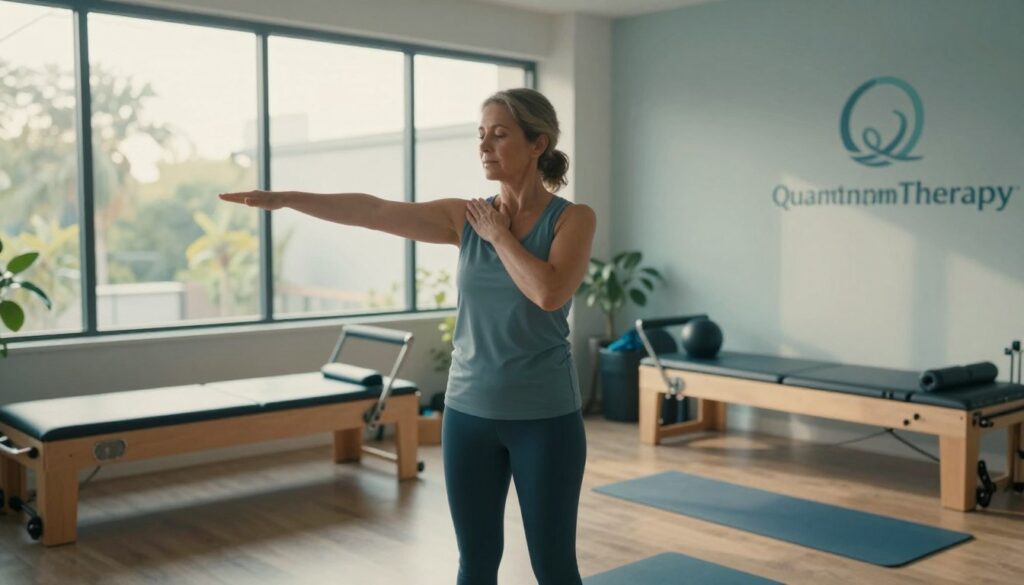
Range of motion exercises help joints and muscles move more freely, reducing stiffness that slows daily tasks. This short guide sets simple, home-friendly steps to improve mobility and flexibility with safe, gentle movement.
Who this guide suits: desk workers in India with posture-related tightness, older adults facing stiffness, and people returning after reduced activity.
The focus is on technique, not intensity. Movements stay slow and controlled. Pain is a clear stop signal; do not push through it. Regular practice matters more than a single intense session.
This article will explain why ROM matters, how it lowers joint overcompensation, the main types of training, safety rules, and step-by-step routines for neck, shoulders, arms, hands, hips, knees, ankles and feet. Use these steps as a foundation before adding strength work so joints handle load better in everyday life.
Key Takeaways
- Gentle, consistent practice builds lasting mobility and flexibility.
- Slow, controlled movement protects joints and reduces discomfort.
- Suitable for desk workers, older adults, and people reconditioning in India.
- Pain is a stop signal; technique beats intensity.
- Use this work as a base before introducing strength training.
Why range of motion matters for mobility, joints and everyday life</h2>
When joints move freely, walking and bending become easier and safer. Range motion is the usable space a joint can pass through. Muscles, tendons and other connective tissue must lengthen smoothly to allow that travel.
What this means for joints, muscle and movement
Healthy joints work in several directions and soak up load without strain. Stiffness often starts in the neck, shoulders, hips and knees. That tightness limits daily motion and reduces efficiency.
Everyday effects: walking, bending and getting up from a chair
Limited travel shows up as a shorter stride, trouble bending to pick things up and effort rising from a chair. These small losses make routine tasks harder and slower.
How compensation increases pain and injury risk
When one joint won’t move, the body twists through the back, shrugs the shoulder or leans to one side. These compensations shift load to other joints and can raise pain over time.
- Self-check: Can you turn your head both ways without discomfort?
- Self-check: Can you reach overhead without arching your back?
This guide aims to restore comfortable travel first, then help you keep it so daily life feels easier and safer.
Common causes of stiffness, pain and reduced movement over time</h2>
Everyday stiffness has clear causes that you can address with simple habits and timely care.
Ageing and tissue change
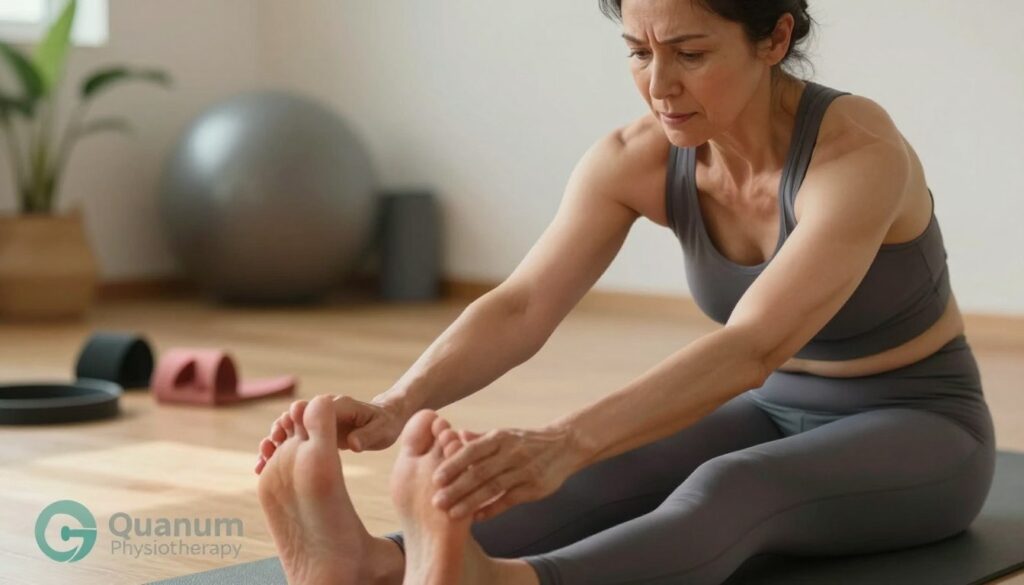
As we age, cartilage thins and joints feel less flexible. Muscles can lose size and strength, shrinking the usable range and making daily life harder.
Arthritis and bursitis
Arthritis and bursitis cause chronic joint pain that often leads to protective guarding. Avoiding movement increases stiffness and reinforces a pain stiffness cycle.
When arthritis flares, gentle movement under guidance usually helps maintain travel and reduce flare-ups.
Injury and post-surgical limits
Fractures, sprains and surgery create short-term loss in range and motion. Progressive, gentle work guided by a clinician supports recovery while protecting healing tissue.
Sedentary life and posture
Long desk hours, commutes or riding scooters can tighten the neck and shoulder, and affect the knee and hip. Small mobility breaks during the day help prevent stiffness.
- Seek prompt care if there is severe pain, swelling, instability or symptoms after trauma.
Types of range of motion exercises and when to use each</h2>
Choosing the right method helps you progress safely and keeps joints working well. Below are three clear options and when each is best used.
Active control for self-led progress
Active work is when you move a limb using your own strength. It builds coordination and confidence. Use this when you can move without sharp pain.
Assisted movement for pain or weakness
Active-assisted movement mixes your effort with help from a hand, towel, wall or caregiver. It bridges gaps when strength or comfort is limited. Try shoulder wall slides or a towel-assisted ankle stretch as examples.
Passive care for very limited mobility
Passive work is when another person or device moves the limb. This suits post‑surgery patients or bedridden people. Caregivers must support joints and move slowly.
How a physical therapist measures progress
Physical therapists measure active, assisted and passive types with tools. A goniometer checks most joints and an inclinometer reads spinal tilt. Baseline numbers help track change and guide safe goals.
| Method | When to use | Example | Who measures |
|---|---|---|---|
| Active | Good strength, tolerable pain | Leg lifts, shoulder circles | Self / physical therapist |
| Active-assisted | Some weakness or discomfort | Shoulder wall slides, towel ankle stretch | Self, caregiver, physical therapist |
| Passive | Very limited mobility or post-op | Caregiver-guided knee bend | Caregiver, physical therapist |
How to do range of motion exercises safely at home</h2>
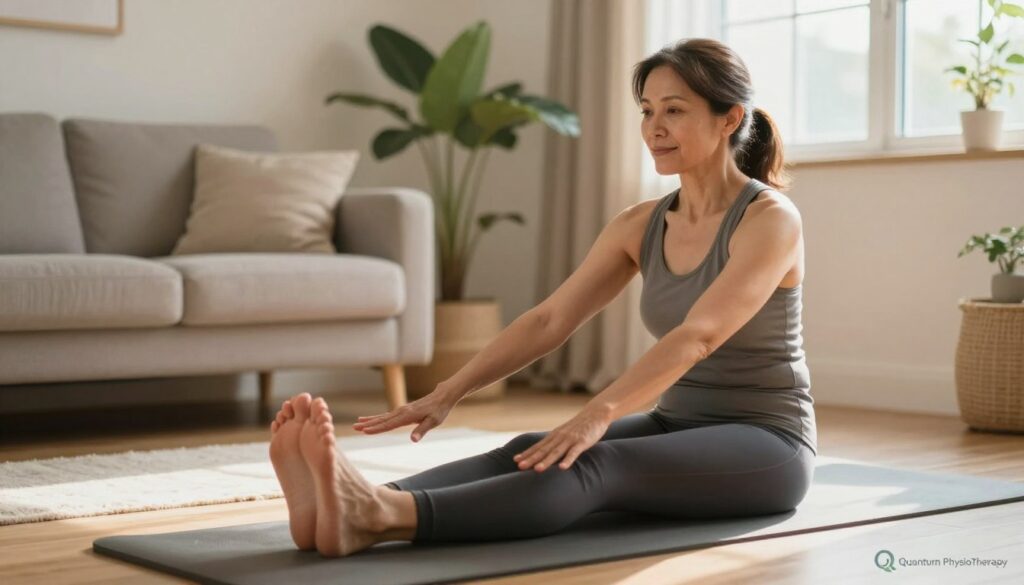
Start every home session with clear attention to posture, breathing and a slow pace. This reduces guarding and helps the joint travel smoothly.
Form, pace and breathing: move slowly and gently
Form matters: keep shoulders relaxed, core lightly engaged and move in a controlled arc. Breathe steadily — inhale before the start, exhale as you reach the end.
Pain rules: mild stretch versus sharp pain
A mild stretch or gentle pull is acceptable. Stop if you feel sharp pain, pinching or any increase in discomfort. If pain persists, seek professional advice.
“If it hurts sharply, stop and reassess before continuing.”
Reps, hold seconds and time: building a simple routine
Begin with 10–15 repetitions for most joints. Use short holds first: try 3–10 seconds, then progress to 20–30 seconds for longer stretches.
- Start small: fewer reps and shorter hold seconds, then increase slowly.
- Set total time for a short session — 5–10 minutes for one area, 15–20 minutes for a full routine.
Seated, standing and lying options
Use a sturdy chair for seated moves if balance is a concern. Stand facing a wall for front support or lie back on a mat for hip work.
Use a towel, table edge or wall to assist arms and legs when needed. If one side feels tighter, reduce range on that side and match breathing and pace.
Range of motion exercises for neck, shoulder and arm mobility</h2>
Simple seated moves help free a tight neck and let your arms reach without strain.
Neck drills for posture-related stiffness
Sit tall. Do cervical rotation and lateral flexion slowly: 1 set of 10, as needed through the day.
Keep the chin level, turn gently to each side, then tilt ear toward shoulder. Pause briefly and return smoothly.
Chin tuck for tech-neck relief
Perform a slow cervical flexion with a chin tuck. Do not collapse the upper back — keep the spine long.
Repeat 10 times, breathing evenly between each rep.
Shoulder and arm practice
Lie on your side for shoulder abduction: lift the arm with thumb up, 15 reps, controlled return.
For external rotation, keep the upper arm close and move only the forearm for 15 reps.
Wall slide: raise both arms, hold for 3 seconds at the top and repeat 15 times. Use door frame rotation by turning the body away until you feel a shoulder stretch.
Elbow and arm control tips
- Keep the wrist neutral and avoid shrugging the shoulder.
- Stop if pinching occurs and match work on both sides over time.
- Move slowly and aim for steady control at all times.
| Drill | Reps / seconds | Key cue |
|---|---|---|
| Cervical rotation | 1 set x 10 | Tall posture, smooth side-to-side turn |
| Chin tuck | 10 reps | Lengthen upper back, avoid collapse |
| Side-lying abduction | 15 reps | Thumb up, controlled return |
| Wall slide | 15 times, hold 3 seconds | Keep ribs down, slow ascent |
Wrist, hands and finger ROM for daily function and grip</h2>
Good hand and wrist mobility keeps daily tasks quick and comfortable. Strong wrists and nimble fingers help with typing, cooking, lifting shopping bags and holding a phone without pain.
Fist drill to open and extend fingers fully
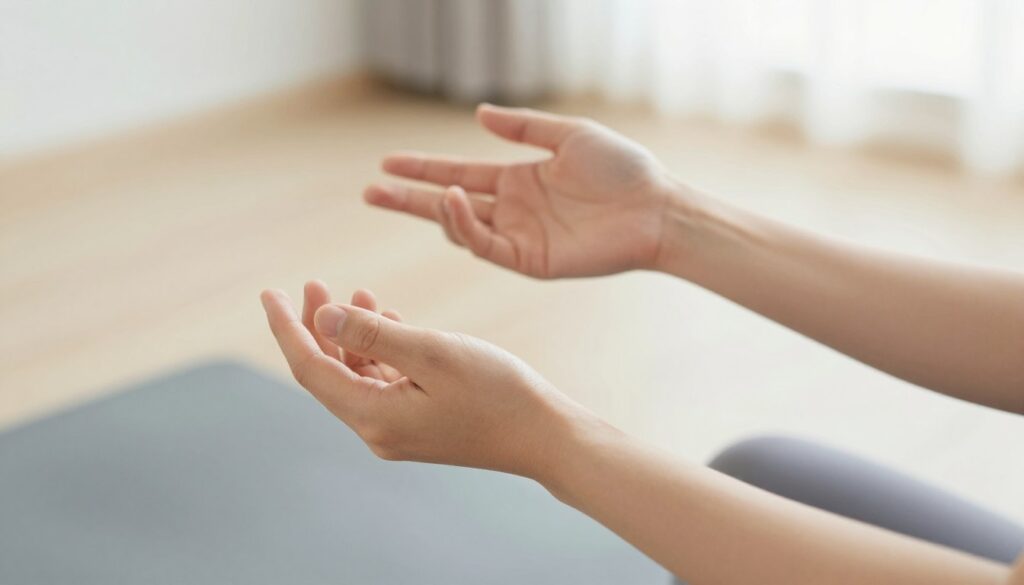
Make a tight fist, then open the palm and extend each finger fully. Repeat 10–15 times. This simple sequence restores opening and closing control after repetitive work or inactivity.
Wrist extension and flexion using a table edge
Place your forearm on a table with the hand over the edge. Move the hand up (extension) and down (flexion) to a mild stretch. Keep the forearm steady and repeat 10–15 times.
Table-supported wrist stretch for tendons and circulation
With palms down and fingers pointing away on the table, lean forward while keeping elbows straight. Hold for a few seconds and repeat 10–15 times. This targets tendons and boosts circulation.
Technique notes: keep shoulders relaxed and neck neutral. Move within a comfortable limit and avoid forcing any position. If pain flares, reduce the angle and cut repetitions until symptoms ease.
| Drill | Reps | Key cue |
|---|---|---|
| Fist drill | 10–15 | Open fully, controlled pace |
| Table edge flex/extend | 10–15 | Forearm steady, mild stretch not pain |
| Table-supported stretch | 10–15 holds | Fingers away, elbows straight, lean gently |
Hip, knee, ankle and foot movements for leg flexibility and balance</h2>
Strong lower-limb mobility helps you walk, climb stairs and stand with less effort. These drills focus on practical hip, knee, ankle and foot control to improve balance and reduce compensations that can travel into the lower back.
Hip options and safety cues
Standing IT band stretch: hold 30 seconds, repeat 4 more times each side. Keep hips level and avoid twisting the pelvis.
Knee-to-chest: hold 30 seconds, repeat 4 times per side. Support the lower back and breathe steadily.
Seated rotation: hold 30 seconds, repeat 4 times per side. Keep the spine tall and move from the hips.
Knee targets for everyday function
Seated extension: hold 3–5 minutes, repeat 2–3 times each leg to regain comfortable sitting-to-standing.
Seated flexion: hold 10 seconds, repeat 2–3 times each leg for bend control.
Heel slides: hold 3–5 seconds, repeat 2–3 times each leg to smooth gait mechanics.
Ankle and foot control
Ankle alphabet: trace letters while keeping the hip and knee still to improve control and coordination.
Towel stretch: hold 30 seconds, repeat up to 10 times to loosen calves and toes. Heel cord stretch: hold 30 seconds, repeat up to 10 times; keep heels flat and toes slightly in.
One leg checks and balance tips
Compare one leg to the other by noting which side feels tighter. Don’t force the stiffer leg to match instantly; progress slowly.
Use a wall or sturdy chair for support during standing work. If dizziness or sharp pain occurs, stop and seek advice.
“Small, consistent practice keeps your legs strong, stable and ready for daily life.”
| Area | Drill | Hold / Reps | Key cue |
|---|---|---|---|
| Hip | Standing IT band / Knee-to-chest / Seated rotation | 30s, repeat x4 each side | Hips level, spine tall |
| Knee | Seated extension / Seated flexion / Heel slides | 3–5 min / 10s / 3–5s; repeat 2–3x | Controlled bend, smooth return |
| Ankle & foot | Ankle alphabet / Towel stretch / Heel cord | Alphabet daily / 30s up to x10 | Isolate ankle, heels flat |
When to see a physical therapist and keep your progress for life</h2>
If daily tasks feel harder than they should, a skilled physical therapist can help restore safe movement.
See a clinician when persistent joint pain, repeated flare‑ups, loss of function, or trouble with stairs, standing or reaching limit your day. Priority referral includes after surgery, fractures or ongoing symptoms from arthritis.
A professional will measure joint movement, note back and limb differences, then build a structured plan matched to your ability. This keeps progress measurable and safe.
Keep gains by scheduling short motion exercises two or three times weekly, pairing mobility with gradual strengthening, and taking movement breaks during long desk spells.
If pain worsens or function drops despite gentle work, seek personalised care rather than guessing.