
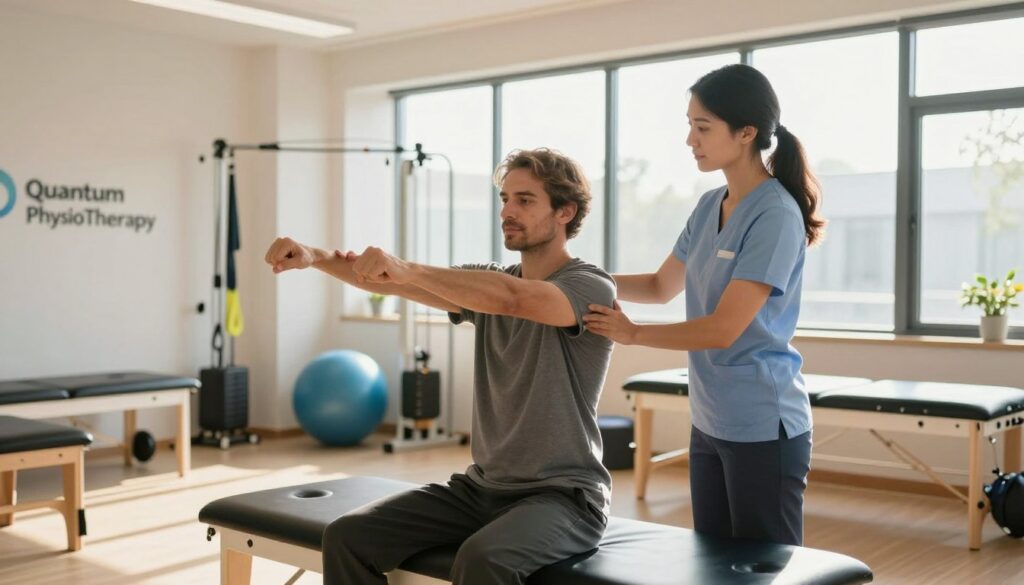
Wondering how to get back on your feet safely after surgery? A physiotherapy-led service bridges hospital care and daily life. It focuses on restoring movement, confidence and independence while respecting tissue healing and your surgeon’s plan.
This page explains what to expect, who it helps and why early action matters. The programme suits patients in India after orthopaedic, cardiac, thoracic, neurological and abdominal operations. It targets common problems such as pain, stiffness and weakness.
Guided sessions also address breathing capacity and circulation risks. A personalised plan speeds safe recovery and reduces avoidable setbacks. Your physiotherapist works alongside the surgeon to match exercises to healing stages and to support long-term health.
Key Takeaways
- Physiotherapy-led rehab sets clear expectations for a safe, structured comeback.
- It links hospital care to real-world function, restoring movement and confidence.
- Individualised plans follow tissue healing and surgeon guidance for a faster recovery.
- Common issues treated include pain, stiffness, breathing and circulation concerns.
- Early, guided support can reduce setbacks and improve overall health outcomes.
Post-surgical rehabilitation: what it is and why it matters after surgery
A structured recovery plan after surgery helps patients regain strength and everyday skills safely. It is a stepwise programme that restores mobility and function while following surgical precautions and healing timelines.
How physiotherapy supports healing, mobility and function
Physiotherapy uses graded activity to protect tissues and promote healing. Short, progressive sessions reduce protective stiffness and rebuild normal movement patterns.
Therapists teach practical tasks to restore balance and everyday function so gains in clinic transfer to home.
Why rehab should continue after hospital discharge
Leaving hospital is not the end of recovery. Weakness, stiffness and low endurance often show up when patients resume daily chores.
Continued therapy and a tailored home programme help maintain progress and prevent setbacks.
What can happen without guided rehabilitation
- Persistent pain and limited range of motion
- Muscle weakness, altered gait and long-term compensations
- Slower return to work, sport or normal life
Professional monitoring ensures exercises progress safely based on patient response and surgeon advice. Adherence to the plan is often the deciding factor in a full recovery.
| Aspect | Guided care | No guided care |
|---|---|---|
| Pain control | Managed with graded therapy | May persist or worsen |
| Mobility | Improves steadily | Limited range, compensations |
| Return to activity | Faster and safer | Delayed or incomplete |
Common post-operative problems we help you overcome
After surgery, many people face a mix of pain, swelling and reduced movement that slows daily life. A focused assessment identifies which issues need early attention and which need gradual progress.

Pain, swelling and wound-site stiffness
Early, safe movement plus hands-on techniques ease protective guarding and reduce wound-site stiffness. Targeted soft tissue work and graded activity improve comfort and encourage normal movement around the scar.
Muscle weakness, reduced strength and loss of range of motion
Muscles often switch off after surgery and immobilisation. Progressive exercises rebuild strength while restoring range and preserving joint health.
Balance, coordination and movement confidence issues
Fear of falling or re-injury can limit walking and chores. Structured balance and coordination training rebuilds control and confidence for everyday tasks.
Breathing difficulties, reduced lung function and low exercise tolerance
Surgery can reduce lung volumes and make breathing shallow. Guided breathing work and paced activity help restore lung capacity and improve exercise tolerance.
Circulation risks, including deep vein thrombosis prevention
Progressive mobility and lower-limb activation support circulation and reduce clot risk. Always follow medical advice while we advance movement safely.
These problems vary by surgery and fitness. Assessment-led plans ensure you do the right exercises at the right time, restoring quality of movement and lasting confidence.
Who this service is for in India
If surgery has left you weaker or less steady, targeted physiotherapy can help you regain independence. This service suits patients across India who have new pain, stiffness, low stamina or reduced independence after an operation.
Orthopaedic surgery patients
Common issues include swelling, stiffness, muscle weakness and altered gait. Focus is on restoring joint mechanics, safe load tolerance and improved mobility.
Cardiac and thoracic surgery patients
Therapy concentrates on gentle movement, posture and improved breathing. Gradual return of exercise tolerance and attention to the lung function are prioritised with care.
Neurological surgery patients
Weakness, altered sensation and movement control problems may need longer, supervised retraining. Plans are adapted for slower progress and safety.
Abdominal surgery patients
Patients often report limited mobility and discomfort with breathing and posture. Continence-related issues can be addressed when relevant to the recovery plan.
Our physiotherapist coordinates with your surgeon and tailors exercises to your home needs—stairs, commuting and work posture in India. If you feel “stuck” after discharge, seek early assessment to avoid compensations that prolong recovery.
Benefits of physiotherapy-led recovery
Therapist‑led recovery brings practical gains: less pain, greater confidence and safer daily movement. This focused approach blends education, pacing and graded exposure so you feel in control as you progress.
Effective pain management and reduced anxiety
Education about healing and careful pacing reduce fear and catastrophising. Gradual exposure to activity lowers anxiety and lets patients manage discomfort without over‑protecting tissues.
Improved posture, mobility and independence in daily activities
Therapists set practical milestones: walking safely, managing stairs, getting in and out of bed and returning to self‑care. These targets restore independence and normal routines.
Strengthening weak muscles and restoring flexibility
Strengthening and stretching are sequenced to protect repairs while increasing capacity. Progressive exercises rebuild power and improve flexibility for functional tasks.
Better blood circulation and safer return to movement
Early mobilisation and targeted limb activation boost blood circulation. Improved circulation reduces complications from long immobility and supports a safer return to activity.
Breathing exercises to clear secretions and prevent chest infections
Guided breathing exercises help clear secretions, expand the lungs and protect lung volumes. This is vital after chest or abdominal procedures to lower infection risk and improve overall health.
- Positioning and comfort advice improves sleep and reduces pressure‑area risk in early recovery.
- Goal: to help you get back to previous activity levels safely, with better mechanics and confidence.
Conditions and surgeries we commonly rehabilitate
Different procedures bring distinct recovery demands; our pathways match those needs.
Total knee, hip and other joint replacements
After total knee replacement (TKR), total hip replacement (THR) and other joint surgery, guided rehabilitation is routine. We focus on safe weight bearing, walking mechanics and staged strengthening to restore function.
ACL reconstruction and arthroscopic knee procedures
Rehab starts with swelling control and restoring range. Progress moves to muscle strengthening, neuromuscular control and return‑to‑sport preparation with graded exercises.
Rotator cuff repair and shoulder stiffness
Staged loading protects healing tendons while improving overhead function. Gentle exercise and shoulder mechanics reduce stiffness and rebuild confidence.
Spine surgery: fusion, laminectomy and decompression
We emphasise gradual mobility, core control and safe return to sitting, standing and work postures. Therapy is tailored to surgical precautions and symptoms.
Nerve releases and post-fracture stiffness
For carpal, cubital or tarsal tunnel releases the aim is symptom relief, mobility and hand or foot strength. Post‑fracture fixation cases use hands‑on techniques and precise exercises to regain range and dexterity.
Specialised pathways
Tailored programmes support post‑amputation gait and prosthetic readiness and address pelvic health after prostate surgery. Adjunct options, including electrical nerve stimulation where clinically appropriate, may aid pain control and muscle activation alongside exercise.
Our post-surgery rehabilitation process: assessment to goal-based planning
We begin each plan with a focused assessment that maps function and risk, then build measurable goals. The physiotherapist carries out a structured assessment at the first appointment to identify key issues and set therapy priorities.
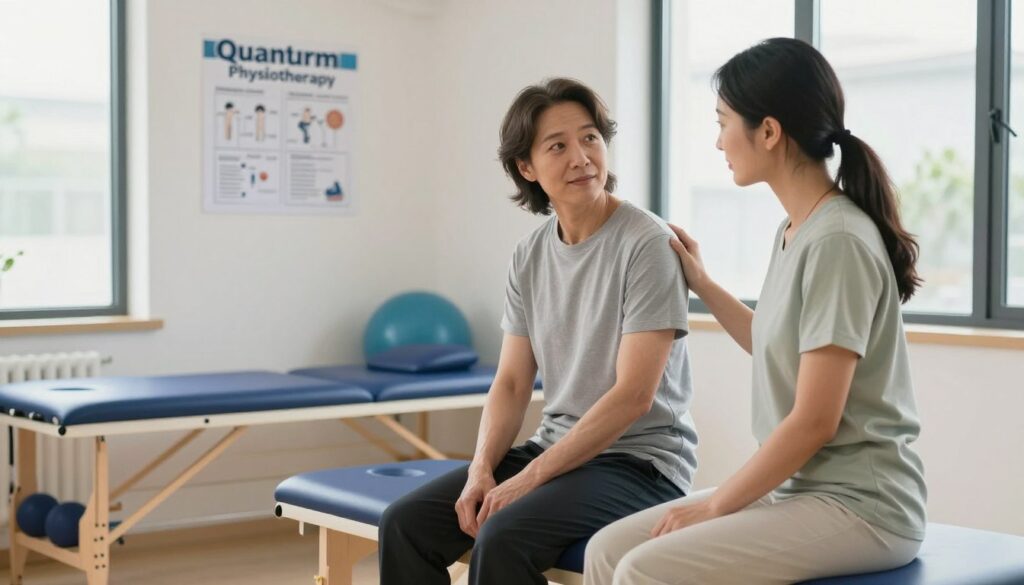
Initial physiotherapist assessment: pain, range, strength, mobility and risk screening
The assessment screens pain levels, swelling, active and passive range of motion, and muscle strength.
We check walking ability, stair negotiation, breathing status when relevant and simple red-flag risk checks.
Setting short- and long-term goals to regain strength and function
Goals are individual and measurable. Short-term aims might include walking independently indoors or climbing a flight of stairs without support.
Long-term goals focus on returning to work, sport or daily roles so patients regain strength and normal function.
Reviewing post-surgical precautions and surgeon recommendations
All plans respect movement precautions, weight-bearing rules and tissue healing timeframes set by the surgeon recommendations.
This protects repairs while allowing safe, graded progress.
One-to-one sessions with progress checks and programme adjustments
Therapy sessions are individual and include regular progress checks. We adjust the programme to avoid under-loading (slow gains) and over-loading (flare-ups).
Clinic work links with a practical home plan so improvements continue between visits.
| Step | What we check | Patient action |
|---|---|---|
| Initial assessment | Pain, swelling, range, strength, gait, breathing, red flags | Bring operative notes, medication list, surgeon protocol |
| Goal setting | Short- and long-term functional targets | Agree measurable steps and timelines |
| Ongoing sessions | Progress checks, exercise progression, risk review | Follow clinic exercises and home programme; give feedback |
To book an appointment, contact the clinic with your surgery date and any surgeon paperwork. Bring operative notes if available.
Recovery is collaborative: patients who share early feedback tend to regain strength faster and return to meaningful activity with confidence.
Therapy techniques and exercises used to restore movement
Here we describe the core techniques that help patients regain control, power and confidence in everyday motion.
Movement therapy and graded strengthening exercises
Movement therapy uses progressive loading to restore muscle strength without exceeding healing limits. Exercises start light and increase by response, so muscle strength returns while protecting repair.
Mobility and range-of-motion work for joints and muscles
Joint- and muscle-specific mobilisation reduces stiffness and restores range motion. Repeated, controlled movement normalises patterns used in daily tasks.
Balance and coordination training for safe walking and daily movement
Retraining gait, turning and stair work on varied surfaces improves balance coordination. This rebuilds confidence for independent living and reduces fall risk.
Soft tissue massage to help manage swelling and improve comfort
Soft tissue massage and swelling-management strategies ease tightness around scars. That comfort supports earlier, cleaner movement and better exercise participation.
Breathing therapy for lung volumes and post-operative chest care
Breathing therapy teaches paced inhalation, airway clearance and gradual conditioning. These steps clear secretions, improve lung volumes and lower chest infection risk.
Electrical nerve stimulation and other electrotherapeutics where appropriate
Electrical nerve stimulation and electrotherapeutics may aid pain relief or muscle activation when clinically indicated. They are used alongside exercises, not instead of them.
| Technique | Purpose | Typical benefit |
|---|---|---|
| Graded strengthening exercises | Restore muscle strength safely | Improved power for daily tasks |
| Mobility work | Increase range motion and reduce stiffness | Smoother joint movement and function |
| Balance training | Retrain gait and coordination | Safer walking and confidence |
| Breathing therapy & electrotherapeutics | Improve lung volumes; aid pain/muscle activation | Better endurance and clearer recovery progress |
Tip: Exercises help most when they are specific, correctly dosed and checked for technique. Choosing the right techniques links directly to better movement quality, safer mobility and a more predictable recovery.
Recovery milestones: returning to work, daily life and sport with confidence
A staged return plan translates clinical progress into real-world abilities like work and sport.
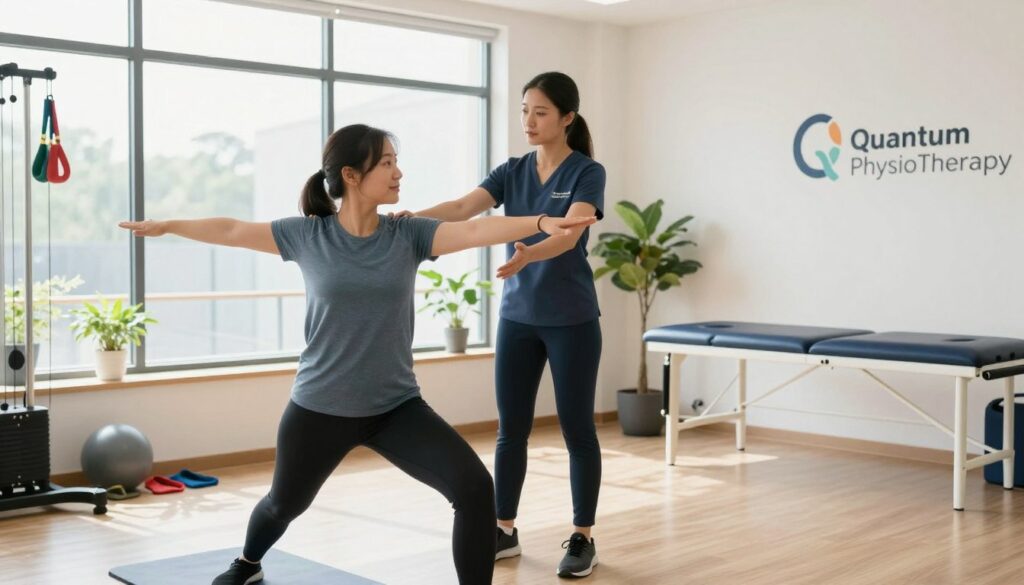
What “progressive loading” means for muscle strength and healing
Progressive loading is a structured increase in challenge. Exercises start light and rise in reps, load or complexity as tissues tolerate the demand.
This approach rebuilds muscle strength while honouring biological healing timelines and surgeon guidance.
Reducing re-injury risk while improving flexibility and function
Technique correction, flexibility work and graded exposure to job or sport demands lower the risk of setbacks.
Examples include staged lifting progressions, sport-specific drills once cleared, and desk-work plans with posture breaks and timed walks for tired legs.
Building confidence to get back to social life, recreation and competitive sport
Planned success experiences rebuild trust in the repaired area. Small, measurable wins boost confidence so patients can get back to social and recreational roles.
When exercises help and progress is tracked by range, reps and walking time, patients regain strength and the quality of movement needed to safely get back to full function.
Start your comeback with expert rehab support
Make the post-operative weeks count by choosing one-to-one physiotherapy that monitors progress and adapts your plan after hospital discharge. This structured rehabilitation prioritises healing, restores function and helps you regain safe movement and confidence.
What to expect: book an appointment, complete an assessment, agree clear goals, and follow a staged programme of exercises and home care. One-to-one sessions use proven techniques—manual work, massage, breathing training and, when appropriate, electrical nerve stimulation—to address pain, range and muscle weakness.
Safety is central: progression respects surgical precautions, pain response and surgeon guidance to reduce setbacks and support steady recovery and circulation.
Ready to get back? Book an appointment to start tailored rehabilitation and take the practical step towards work, daily life and sport with confidence.