
Injury Assessment: Understand Your Condition and Recover

injury assessment

In practical terms, an injury assessment is a structured way to spot urgent risks, guess what is likely harmed and pick safe next steps without delaying emergency help. This quick guide shows simple checks that protect a person while professionals arrive.

Know the difference between signs and symptoms. Signs are what you can see, hear or feel. Symptoms are what the person reports. Both matter when judging on the spot.

The procedure is staged: first address life‑threats with DRSABCD, then use STOP for a rapid on‑field screen, and follow with TOTAPS for a fuller check. Stop as soon as you find clear indicators that the person should not continue activity.

This approach is a precautionary check, not a full medical diagnosis. Its purpose is to support decision‑making — to stop activity, seek medical care, or monitor — and to complement professional care. Good practice looks like calm communication, minimal movement and a clear record of what you found and did.

Key Takeaways

  • Use a staged, safe process to prioritise life‑threats first.
  • Combine observed signs and reported symptoms for clearer judgement.
  • Use simple checks (DRSABCD, STOP, TOTAPS) and stop when needed.
  • This procedure guides decisions, not a medical diagnosis.
  • Keep the person calm, limit movement and note actions taken.
  • Seek professional care when red flags appear or recovery stalls.

Start with first aid priorities before you assess the injury

Safety first. Ensure the scene is secure for you, bystanders and the person before you approach. An unsafe area can cause more harm and delay proper help.

Make the scene safe and check for response using DRSABCD principles

Follow DRSABCD in order: check for Danger, check for Response, Send for help, open the Airway, check Breathing, begin CPR if needed, and use a defibrillator if available.

To check response, speak clearly and ask simple questions. Ask the person to squeeze your hand or follow a basic command. Do not move anyone if it may worsen spinal or other serious conditions.

Primary assessment basics: breathing, circulation and severe bleeding checks

Confirm breathing and circulation quickly. Look, listen and feel for breaths. Check the pulse if trained. Locate and control severe bleeding at once — this is non-negotiable.

  • If no response or life‑threats exist, continue through SABCD and call for urgent help.
  • Only perform a secondary survey once life‑threats are ruled out.
  • Even minor visible wounds need attention if the person shows abnormal signs or worsening symptoms.
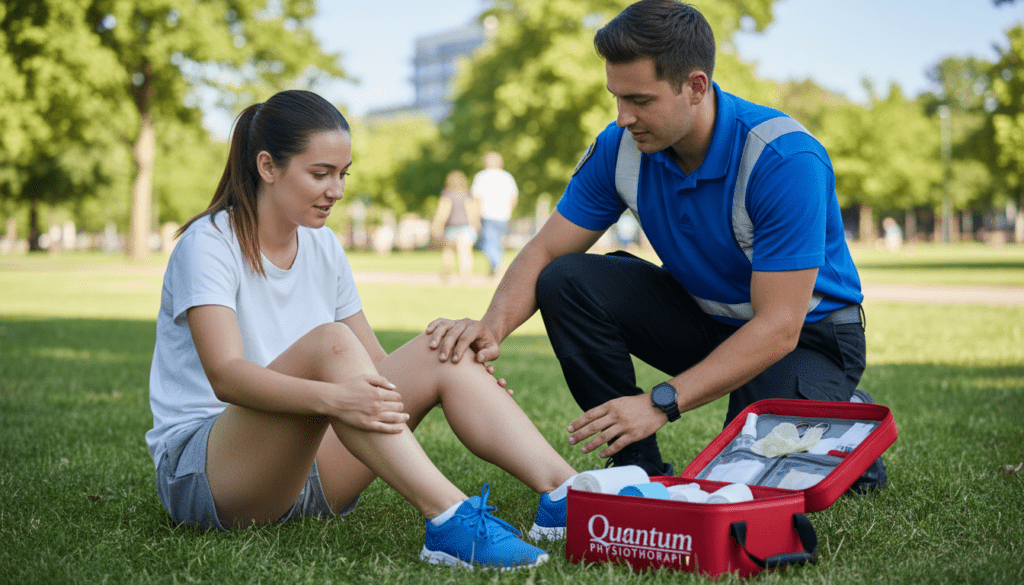
A dynamic first aid response scene in a bright, well-lit outdoor environment. In the foreground, a professional first responder in a blue uniform is attending to an injured individual sitting on the grass, exhibiting a calm and reassuring demeanor. The injured person, dressed in casual athletic clothing, appears focused on the responder's instructions. In the middle ground, a first aid kit is open, showcasing various medical supplies like bandages and antiseptics. The background features a blurred park landscape with trees and a sunny sky, enhancing a sense of urgency yet hope. The composition should use a slightly elevated angle, capturing the interaction and emphasizing the importance of first aid priorities. Overall, the atmosphere conveys professionalism, urgency, and compassion, highlighting the brand name "Quantum Physiotherapy" subtly integrated into the first aid kit design.

Step Action Why it matters
Danger Scan and make scene safe Prevents further harm to helpers and the person
Response Talk and test simple commands Shows level of consciousness and guides next steps
Breathing/Bleeding Check breaths, control severe bleeding Addresses immediate threats to life

Injury assessment step-by-step: STOP, TOTAPS and a head-to-toe check

Work through a brief on-field screen, then move to a systematic head‑to‑toe review. This sequence helps protect the person and clarifies the next steps.

STOP first. Halt activity, protect the affected area and avoid testing through pain. Preventing further harm is the immediate priority.
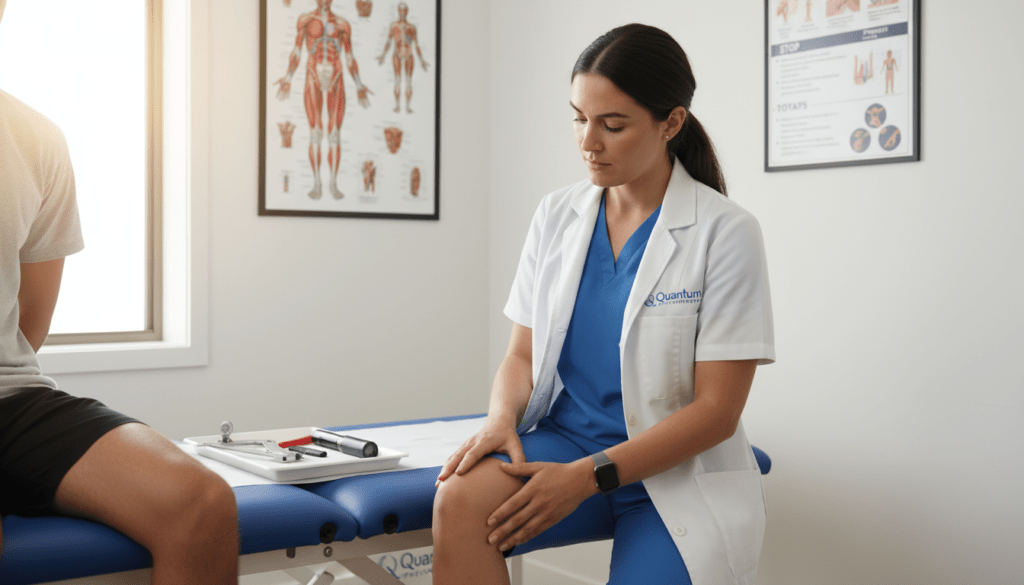
A professional physiotherapist demonstrating injury assessment techniques in a well-lit, clinical environment. In the foreground, a therapist in professional attire is intently examining the knee of a patient, who is seated on an examination table, both showing focused expressions. In the middle, a detailed visual of assessment tools like a goniometer and a pen torch is spread out on the table, emphasizing the importance of precision. The background features anatomy charts and a poster detailing the STOP and TOTAPS protocols. Soft, natural lighting streams in from a window, enhancing the caring atmosphere of the room. This image should visually represent comprehensive injury assessment while integrating the brand name "Quantum Physiotherapy."

Use TOTAPS for a fuller check: Talk, Observe, Touch, Active & Passive movement, then Skills.

Talk

Ask what happened, where it hurts and how the pain feels. Note cracking, pins and needles, dizziness or visual change, and what bystanders saw.

Observe

Look for swelling, discolouration, obvious deformities and unequal movement. Compare left and right for guarding or altered posture.

Touch

Palpate gently for tenderness, heat, hardness or unusual softness. Stop if pain worsens or if a fracture or spinal concern is likely.

Active & passive movement

Only test movement if it does not increase pain. Use controlled, gentle passive moves; any sharp pain, locking or resistance means stop.

Skills test and head-to-toe checks

Try simple functional skills—walk a few steps, grip or raise an arm—to decide if they should stop activity. Check the head and face for scalp lumps, mouth wounds and any blood from ears or nose.

Assess the eyes and pupils for tracking, equal size and light reaction. Take care with neck and shoulder; stabilise if spinal risk is suspected.

Scan chest, ribs and abdomen for bruising or tenderness. Compare arms, hands and legs for deformities, test finger and toe movement and note any altered sensation.

Know when to stop, stabilise and call EMS in India

A clear threshold must trigger escalation: if breathing, consciousness or pulse change, pause activity and get help at once. Prioritise immediate care and activate emergency services when life‑threatening conditions are present.
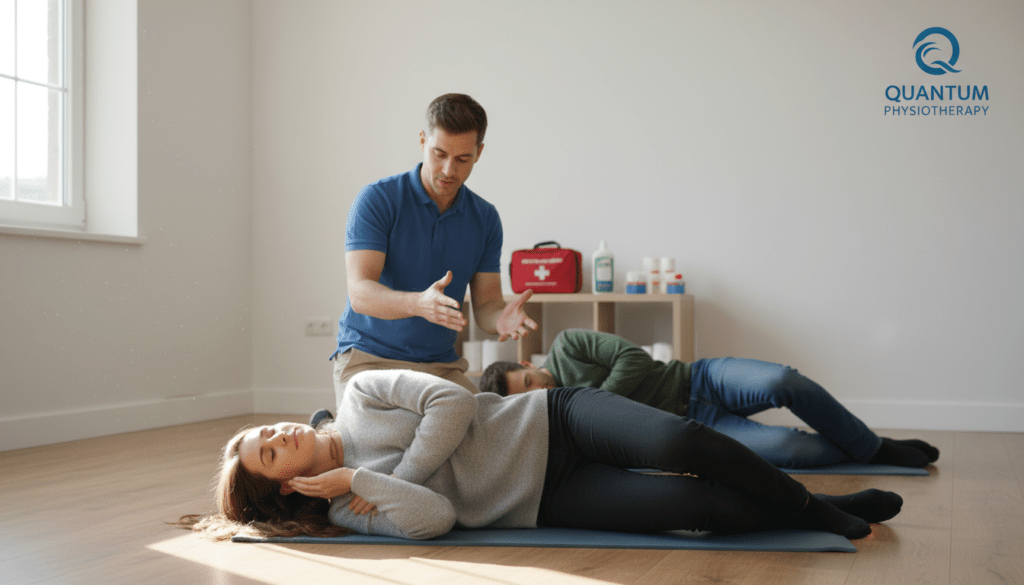
A professional setting depicting the side recovery position, featuring a male and female figure in modest casual clothing. The foreground shows the female figure lying on her side, demonstrating the recovery position, her body angled slightly to capture the correct posture. In the middle ground, an instructor is gently guiding the male figure, who is on the floor, into the side recovery position, demonstrating a supportive and educational environment. The background features a bright, well-lit room with soft natural light filtering through a window, providing a warm and reassuring atmosphere. The room includes basic medical supplies subtly placed, signaling a sense of preparedness. The logo for "Quantum Physiotherapy" is present in the corner of the image, providing a touch of professionalism without cluttering the scene.

Red flags that suggest a life‑threatening condition

Stop and escalate if you see altered consciousness, sudden confusion, seizures, severe or uncontrolled bleeding, intense chest pain, trouble breathing, or signs of shock.

Head warning signs needing urgent action include unequal pupils, repeated vomiting, severe headache or rapidly worsening response after impact.

Spinal precautions: when not to move the person

Suspect spinal risk with high‑energy impact, fall from height, neck pain, numbness or weakness. Do not move the neck or roll the person unless immediate danger exists.

When to suspect Action
Fall, high impact, neck or shoulder pain Stabilise neck; avoid repositioning
Numbness or weakness Keep still, call EMS (112 / 108)
Immediate hazard (fire, collapse) Move only to safe area, then re‑assess

Recovery position: safe side‑lying steps

Use side‑lying for an unresponsive but normally breathing person only if no pelvic or spinal risk and you must protect the airway or leave briefly.

Extend one arm above the head, roll the body so the head rests on that arm, and bend both legs to stabilise the side position.

While waiting for EMS, monitor breathing and response, re‑check bleeding control and be ready to start CPR if breathing becomes abnormal. Give clear location and hazard details when you call 112 or 108.

Next steps after the assessment: monitor, document and support recovery

Following the field steps, document what you observed and continue careful observation. Keep watching the person for changes in breathing, consciousness and any new bleeding. Recheck the affected area at intervals without forcing movement.

Record the mechanism, time, a simple pain score, visible deformities, points of tenderness, changes in movement and any head or eyes signs. This note helps clinicians on handover.

Tell EMS what you saw (signs), what the person reported (symptoms), the first aid given and whether the condition improved, stayed the same or worsened. Avoid giving food or drink if surgery or reduced consciousness is possible.

Protect the area, keep the body warm, encourage stillness if the neck or shoulder may be involved, and leave medical ID jewellery in place. Seek follow‑up if pain, swelling, numbness or altered vision develop.

The aim of this procedure is to spot serious problems early, limit harm and help safe recovery with timely medical care.

FAQ

What are the first things I should do before checking a casualty?

Make the scene safe for you and the person. Use DRSABCD (Danger, Response, Send for help, Airway, Breathing, CPR, Defibrillation) to identify immediate life threats. If the scene remains hazardous, wait for trained responders and call emergency services in India (112) or local numbers.

How do I perform a primary check for breathing and circulation?

After confirming the person is responsive or not, open the airway and look, listen and feel for breathing for up to ten seconds. Check circulation by observing skin colour and temperature and by looking for severe bleeding. If breathing is absent or circulation compromised, start CPR and arrange a defibrillator if available.

What does STOP mean for a quick on-field check?

STOP stands for Stop, Talk, Observe, and Prevent further harm. Pause the activity, ask what happened and where it hurts, visually inspect for swelling or deformity, and immobilise or remove from danger to avoid worsening the condition.

How should I ask questions to get useful information from the injured person?

Use simple, direct questions: “What happened?”, “Where does it hurt?”, and “Can you move that limb?” Note symptoms such as numbness, pins and needles, dizziness or loss of consciousness. Keep your tone calm and clear to reduce anxiety.

What signs should I look for when observing an area for damage?

Look for swelling, discolouration, open wounds, visible deformity, asymmetry between sides, and any fluid or blood from the ears, nose or mouth. Observe the person’s facial expressions and breathing pattern for pain or distress.

How do I safely touch and examine painful areas?

Use gentle palpation, working from non-painful to painful areas. Check for warmth, hardness, tenderness and specific points that reproduce pain. Stop if movement greatly increases pain or if you suspect a fracture or spinal injury.

When should I ask the person to move the limb actively or move it for them?

Ask for active movement only if there is no obvious deformity, severe pain, numbness or risk of spinal injury. Avoid forcing movement; if active movement is impossible, consider gentle passive assessment only by trained personnel and immobilise if needed.

What simple skills tests can indicate if it is safe to continue activity?

Functional checks include asking the person to walk a few steps, squeeze your fingers, or perform single-joint movement. Any instability, significant pain or weakness is a cue to stop activity and seek further care.

What should I inspect on the head and face after a blow or fall?

Check the scalp for lumps or wounds, look inside the mouth for dental trauma, and note any blood or clear fluid from the ears and nose. Loss of consciousness, severe headache, vomiting or unequal pupils require urgent medical assessment.

How do I assess the eyes and pupils quickly?

Ask the person to follow your finger to check tracking. Compare pupil size and test reaction to light if safe to do so. Unequal pupils, inability to track or loss of vision demand immediate emergency care.

When must I stabilise the neck and avoid moving the person?

If the mechanism of injury suggests head or neck trauma, the person is unconscious, has neurological symptoms (numbness, weakness) or severe midline neck pain, stabilise the cervical spine and avoid turning or sitting them up until trained help arrives.

What are the warning signs in the chest, ribs or abdomen that need urgent attention?

Watch for difficulty breathing, rapid or shallow breathing, severe pain, visible bruising, chest wall instability or signs of internal bleeding (pale, clammy skin, low blood pressure). These signs warrant immediate transfer to hospital.

How should I compare and assess arms and hands?

Compare both sides for swelling, deformity and range of motion. Test finger movement and grip strength. Check circulation and sensation by assessing colour, temperature and feeling in the fingers; impaired findings need prompt evaluation.

What checks are appropriate for hips, legs and feet on scene?

Observe for deformity, swelling or shortening of a limb. Ask the person to wiggle toes and press down on the foot to test weight-bearing if safe. If there is severe pain, obvious deformity or inability to bear weight, immobilise and seek medical care.

What red flags indicate a life-threatening condition?

Signs include unresponsiveness, severe breathing difficulty, uncontrolled bleeding, chest pain, sudden weakness or numbness, seizure, severe head injury symptoms, and signs of shock. Call emergency services immediately.

How do I follow spinal injury rules and avoid worsening harm?

Assume spinal involvement if the mechanism suggests it. Keep the head, neck and spine aligned, limit movement, use manual stabilisation and wait for trained rescuers or ambulance crews to perform log-rolls and proper immobilisation.

When is the recovery position appropriate, and how does it help?

Use a side-lying recovery position for an unresponsive but breathing person with no suspected spinal injury. It keeps the airway clear and reduces aspiration risk while you monitor breathing and wait for help.

What should I do after the initial check is complete?

Monitor vital signs, record changes and document findings. Provide basic wound care, immobilise fractures, and support rehabilitation advice where appropriate. Arrange transport to a healthcare facility if indicated and inform clinicians of your observations.

When should I call emergency medical services in India?

Call EMS for any life-threatening signs, suspected spinal or major fractures, uncontrolled bleeding, severe head or chest trauma, altered consciousness, or when you cannot safely manage the situation on scene. Use 112 or local emergency numbers.
WP2Social Auto Publish Powered By : XYZScripts.com