Discover the Benefits of Sports Rehabilitation

sports rehabilitation

Sports rehabilitation is a results-focused pathway for active people across India who want a safe, confident return to play rather than a rushed comeback.

This approach treats pain and injury that affect the musculoskeletal system and aims to restore function, reduce pain and rebuild movement quality.

An expert-led programme links thorough assessment, progressive loading and performance goals into one structured plan. This is more than quick symptom relief; it is a measured treatment that prepares the patient for long-term fitness and health.

Many feel better early on but still lack the strength, control and confidence needed for sport. That gap is why advanced sports rehabilitation matters and lowers the risk of re-injury.

Key Takeaways

  • Structured care reduces pain and rebuilds movement quality.
  • An expert pathway combines assessment, loading and performance goals.
  • Short-term ease is not the same as readiness to return to sport.
  • Advanced approaches cut re-injury risk and protect long-term health.
  • Programmes focus on measurable progress and patient confidence.

Why sports rehabilitation matters for recovery, performance and injury risk

A structured recovery pathway restores movement, strength and sport-ready confidence after injury. It is not simple rest or basic physio; it is a stepwise process that rebuilds range of motion, coordination and power so you can return to activity safely.
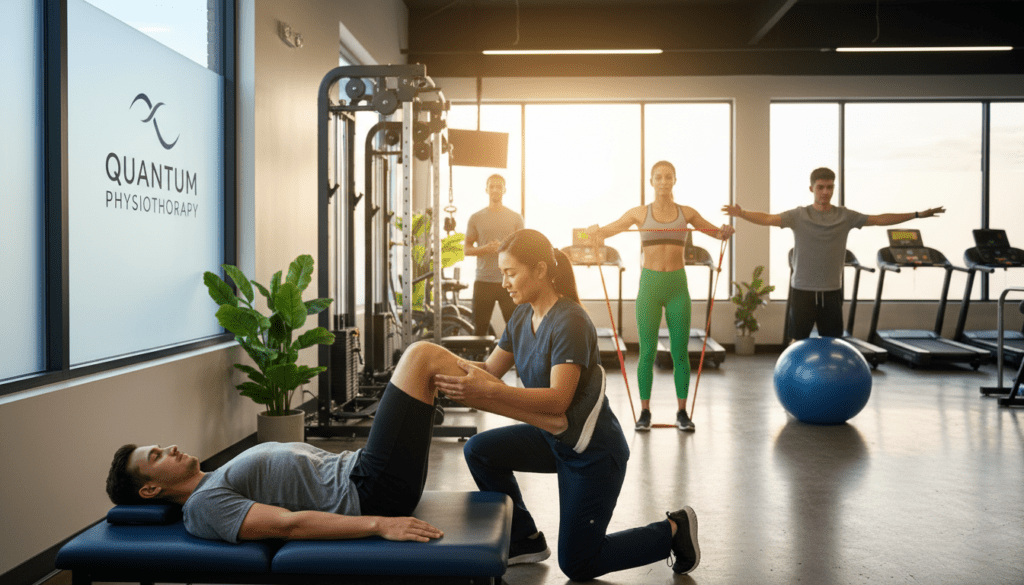
A dynamic sports rehabilitation scene in a modern clinic setting, highlighting a diverse group of individuals engaged in various rehabilitation activities. In the foreground, a focused physiotherapist, dressed in professional attire, is demonstrating an exercise to an athlete, showcasing the personal attention involved in recovery. In the middle ground, another athlete is using resistance bands, while a third person is performing balance exercises on a stability ball. The background features rehabilitation equipment like treadmills and weights, bathed in warm, natural light filtering through large windows. The atmosphere conveys motivation and hope, emphasizing recovery and performance enhancement in a professional environment. Include the brand logo "Quantum Physiotherapy" subtly in the background, integrating it into the clinic's design.

What it is and who it supports

Practical care combines precise evaluation with targeted exercises and progressive training. This benefits competitive athletes, recreational players, runners, gym-goers, students and working professionals whose fitness or daily life is affected by injuries or repeated flare-ups.

When to book an assessment

Seek an assessment immediately after an acute injury (slip, fall or collision), when overuse symptoms persist, or following surgery when staged progression is essential. Early evaluation helps set realistic timelines and measurable milestones.

How tailored programmes work in India

Tailored plans adapt to your sport, schedule, travel and facility access while keeping clinical standards high. A coordinated team of physiotherapists and rehab professionals guides you from early recovery to return-to-training decisions, lowering re-injury risk through graded exposure to real sport demands.

  • Outcome-focused: progress measured by function, not just pain relief.
  • Practical: exercises are selected and progressed after careful evaluation.

Common sports injuries and warning signs we treat

Here we outline the frequent conditions seen in clinic and clear red flags that mean you should seek professional care.
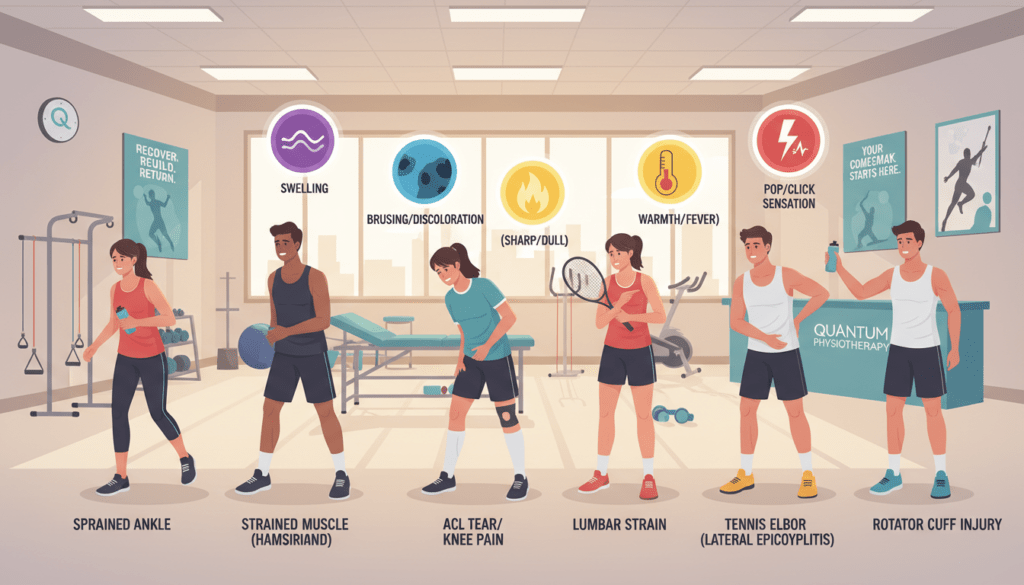
A detailed illustration showcasing common sports injuries and their warning signs, designed for a professional context. In the foreground, depict a diverse range of athletes in modest sports attire, each demonstrating a specific injury, such as a sprained ankle, strained muscle, or knee problem. The middle ground features clearly labeled icons or symbols indicating warning signs like swelling, bruising, or pain areas. The background includes a well-equipped rehabilitation clinic with warm lighting and motivational sports posters, evoking a sense of care and recovery. Use a wide-angle lens effect to capture the environment while ensuring all figures are anatomically correct and in realistic poses. The overall atmosphere should be supportive and educational, reflecting an inviting space for sports rehabilitation, with the brand name "Quantum Physiotherapy" subtly integrated into the design.

Knee problems

ACL tears, meniscal issues and runner’s knee often cause immediate swelling, a feeling of giving way or sharp pain on turning. Seek assessment if you notice buckling, pain on stairs, or loss of confidence when changing direction.

Head injury and concussion

Concussion follows a bump, blow or jolt to the head and can cause dizziness, confusion or persistent headache. Immediate clinical care protects long-term recovery and guides a safe return to play.

Muscle strains and tendon pain

Hamstring strains and Achilles tendonitis present with a sharp pull, tenderness and morning stiffness. Reduced sprint or jump tolerance and ongoing discomfort mean progressive loading and guided rehab are needed.

Sprains and instability

Ankle or wrist sprains that keep “giving way” suggest incomplete recovery. Stability work and proprioception training reduce recurrence and restore sport-specific confidence.

Shoulder symptoms

Overhead activities can trigger dislocation, impingement or rotator cuff problems. Look for pinching, weakness or limited range of motion and seek assessment for structured treatment.

Back, hip and nerve-related pain

Radiating pain, numbness or tingling, or pain with sitting or bending indicate conditions such as slipped disc, sciatica or piriformis syndrome. These signs need a staged plan to manage symptoms and restore function.

“A patient with an ACL tear and meniscal repair reported repeated buckling while walking. After a structured block of sessions they regained stability and confidence.”

Injury group Key warning signs Why seek assessment Typical timeframe
Knee (ACL/meniscus) Swelling, instability, pain on stairs Prevent chronic instability and re-injury Weeks to months, depending on surgery
Concussion Headache, confusion, balance loss Protect brain health; staged return Days to weeks; guided progression
Hamstring / Achilles Sharp pull, tenderness, reduced power Progressive loading speeds safe return 1–6+ weeks by severity
Sprains / nerve pain Giving way, radiating pain, tingling Restore stability and nerve function Variable; targeted rehab required

Our assessment-led treatment approach for advanced sports rehab

Assessment-led care identifies the exact deficits—mobility, strength or control—so treatment targets the root cause. Every plan starts with an expert evaluation of range of motion, joint stability, flexibility and specific movement restrictions. Findings set clear goals and measurable milestones.
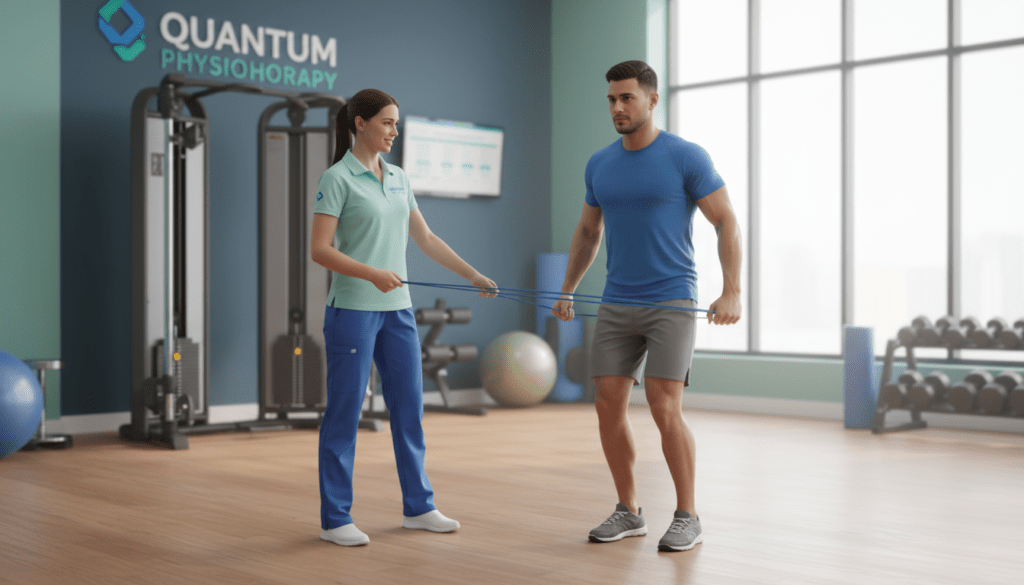
A dynamic sports rehabilitation scene showcasing a professional physiotherapist working with an athlete in a state-of-the-art clinic. In the foreground, the physiotherapist, dressed in a smart casual outfit, is demonstrating a therapeutic exercise using resistance bands. The middle layer features the athlete, focused and determined, performing the exercise while wearing athletic gear. The background reveals modern rehabilitation equipment and soft, natural lighting streaming through large windows, creating an inviting atmosphere. The color palette should be calming, with blues and greens dominating. The scene embodies professionalism and dedication, reflecting the brand "Quantum Physiotherapy," emphasizing a positive and encouraging mood essential for recovery and progress.

Targeted evaluation and progress checks

Clinicians use objective tests to guide treatment choice and timing. Re-assessment happens at set intervals so progress is tracked and load increases safely.

Staged exercises to rebuild capacity

Rehab begins with mobility and activation, moves to strength and stamina, then adds coordination, speed and sport-like confidence. Exercises are tailored for fitness and daily activities.

Pain, swelling and modality use

Heat, cold, massage and stretching are used pragmatically to manage pain and swelling while capacity improves. These tools support, not replace, active treatment.

Reduced-load options and tech

Aquatic therapy offers low-load work for low back pain using standing drills, floating drills, swimming and resistive tools. Advanced conditioning like HUBER® 360 trains posture, balance, mobility and dynamic control to reinforce neuromotor function.

Team care and return-to-play guidance

Coordinated teams give ongoing support, clear home programmes and return-to-training criteria that protect long-term health and performance for athletes and recreational players.

Get back to training with confidence and long-term health

A staged conditioning block helps you move from clinic milestones to real-world training with reduced re-injury risk.

Typical outcomes include a confident return to training, improved fitness, restored sport-specific capacity and a lower risk of repeat injury through complete conditioning and follow-up care.

Progression is simple: control pain and restore movement, build strength, add sport conditioning, then pass on-field readiness checks. Real cases show an ACL pathway returned a FIFA referee to duty after about nine months, and a footballer regained knee stability after 30 sessions.

Next steps: book an assessment, bring scans or surgical notes and expect a tailored plan aligned to your activity and schedule. Ongoing team support and a clear home and gym plan often turn “feeling better” into “performing better.”

Get in touch to book an evaluation — thanks for considering our service and we are committed to your safe return to sport and long-term health.

FAQ

What is sports rehabilitation and who benefits from it?

Sports rehabilitation is a targeted programme of assessment, manual therapy, exercise and conditioning designed to treat injuries and restore function. It supports professional athletes, weekend players, fitness enthusiasts and anyone recovering from surgery or overuse problems. Care focuses on pain relief, strength, mobility and safe return to activity.

When should I seek rehabilitation after an acute injury or surgery?

Seek assessment as soon as possible after an acute injury, a suspected fracture, severe sprain, concussion or post-operative discharge. Early evaluation helps reduce complications, control swelling and set a clear plan for progressive loading. For overuse issues, seek help when pain limits training or daily activities.

How do tailored programmes help me return to activity safely?

Tailored programmes begin with an expert evaluation of movement, range of motion and stability. Therapists set staged goals, prescribe progressive strength and neuromotor training, and adjust intensity based on recovery. This approach reduces re-injury risk and rebuilds confidence for sport-specific demands.

Which common injuries do you treat and what are warning signs?

We treat knee problems (ACL tears, meniscal pain, runner’s knee), head injuries including concussion, muscle strains and tendon pain such as hamstring or Achilles issues, sprains (ankle, wrist), shoulder dysfunction and back or nerve-related pain like sciatica. Warning signs include persistent swelling, weakness, loss of function, numbness or worsening pain.

How are concussions managed and why is immediate care important?

Concussion management involves immediate removal from play, neurological screening, graded rest and supervised return-to-activity protocols. Early specialist input minimises prolonged symptoms and reduces the risk of repeat brain injury.

What assessment methods are used to plan my treatment?

Clinicians perform movement and postural assessment, range-of-motion and strength testing, stability and functional screening, plus sport-specific biomechanical analysis where required. These findings guide personalised therapy and measurable rehab milestones.

Which treatments reduce pain and swelling during early stages?

Early-stage care uses a combination of manual therapy, targeted exercise, cryotherapy or heat as appropriate, soft-tissue techniques and guided activity modification. These reduce inflammation, restore motion and prepare tissues for progressive loading.

Can aquatic therapy help with low back pain or reduced-load training?

Yes. Aquatic therapy provides buoyant, low-impact conditions ideal for pain reduction and controlled strengthening. It helps rebuild movement patterns and endurance when land-based loading is painful or contraindicated.

How do you rehabilitate shoulder injuries after the initial rest period?

After acute control, rehabilitation focuses on restoring range, strengthening rotator cuff and scapular stabilisers, and progressive functional loading. Treatment includes manual techniques, targeted exercises and movement retraining to regain pain-free overhead function.

What role do sport-specific biomechanics and neuromotor training play?

Sport-specific work retrains movement patterns, improves coordination and addresses technique faults that predispose to injury. Neuromotor drills enhance balance, timing and reactive control, which are critical for preventing recurrence and optimising performance.

Do you use advanced equipment for conditioning and balance?

Yes. We use specialist devices such as the HUBER® 360 to provide controlled multidirectional training for posture, balance and dynamic strength. Equipment-led conditioning complements hands-on therapy and functional exercises.

How does team-based care support my long-term recovery?

Team-based care brings together physiotherapists, orthopaedic consultants, strength and conditioning coaches and sports physicians. This collaborative approach ensures cohesive treatment planning, ongoing monitoring and adjustments to training to support long-term health and performance.

How long does a typical rehabilitation programme take?

Duration varies by injury severity, surgical requirements and individual response. Minor strains may resolve in weeks, while ligament repairs or complex nerve-related issues can need months of staged rehab. Progress is measured by functional milestones rather than strict timelines.

Will rehabilitation improve my performance as well as treat injury?

Yes. Rehab not only addresses pain and deficits but also targets strength, endurance, movement efficiency and injury prevention. Many athletes report improved performance after completing structured programmes that correct weaknesses and optimise mechanics.

Is treatment available for recreational players and older adults?

Absolutely. Programmes are adapted for age, activity level and goals. Whether returning to community sport, managing chronic joint pain or improving fitness, personalised care emphasises safety, gradual progression and functional outcomes.

How do I book an assessment and what should I bring?

Contact the clinic to arrange an initial evaluation. Bring any imaging reports, surgical notes, details of pain or functional limitations, and your activity goals. This information helps clinicians create an efficient, targeted plan from the first appointment.
WP2Social Auto Publish Powered By : XYZScripts.com